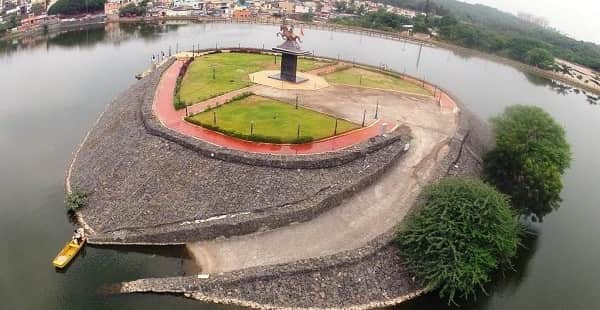
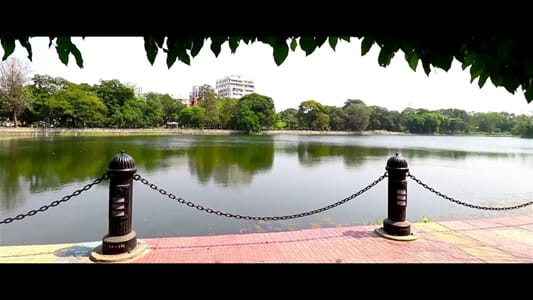
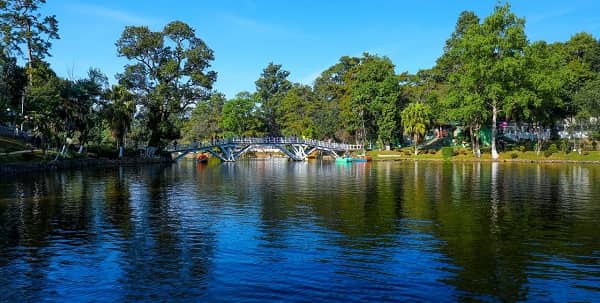
The Godavari River is one of India’s most important rivers, carrying water across the heart of the Deccan Plateau before reaching the Bay of Bengal. From the hills near Nashik in Maharashtra to the fertile delta of Andhra Pradesh, the river supports farms, towns, industries, reservoirs and millions of people. Its enormous geographical reach has earned it the popular name “Dakshin Ganga” or “Ganga of the South.”
At approximately 1,465 km, the Godavari is the longest river in Peninsular India and the second-longest river in India after the Ganga when considering rivers primarily associated with the country. It originates at Trimbakeshwar near Nashik in Maharashtra, flows eastwards across the Deccan, passes through Telangana and Andhra Pradesh, and finally empties into the Bay of Bengal.
Its importance extends far beyond the main river channel. Major tributaries such as the Pranhita, Indravati, Manjira, Purna and Sabari create a vast drainage basin covering parts of several Indian states. This makes the Godavari a crucial river for agriculture, irrigation, hydropower, drinking water and the economy of central and southern India.
Godavari River Overview
| Particular | Details |
|---|---|
| River Name | Godavari River |
| Popular Name | Dakshin Ganga / Ganga of the South |
| Origin | Trimbakeshwar, near Nashik |
| Origin State | Maharashtra |
| Mountain Range | Western Ghats |
| Approximate Length | 1,465 km |
| General Flow Direction | West to east |
| Main Flowing States | Maharashtra, Telangana and Andhra Pradesh |
| Basin States | Maharashtra, Telangana, Andhra Pradesh, Chhattisgarh, Madhya Pradesh, Odisha and Karnataka |
| Major Tributaries | Pranhita, Indravati, Manjira, Purna, Sabari and Pravara |
| Final Destination | Bay of Bengal |
| Major Delta | Godavari Delta, Andhra Pradesh |
| River Type | Peninsular river |
Where Does the Godavari River Originate?
The Godavari originates near Trimbakeshwar in Nashik district of Maharashtra, in the Western Ghats. Trimbakeshwar is also a major pilgrimage centre and is home to the famous Trimbakeshwar Jyotirlinga temple.
The source region lies at an elevation of more than 1,000 metres. Interestingly, the Godavari begins relatively close to India’s western coast but does not flow into the Arabian Sea. Instead, it travels eastwards for nearly the entire width of Peninsular India before reaching the Bay of Bengal.
This happens because the general slope of the Deccan Plateau is towards the east.
Important facts about the Godavari’s origin:
- It originates near Trimbakeshwar.
- The source is in Nashik district, Maharashtra.
- It begins in the Western Ghats.
- It primarily flows eastwards.
- Its final destination is the Bay of Bengal.
- Trimbakeshwar has significant religious importance.
What Is the Length of the Godavari River?
The Godavari River is approximately 1,465 kilometres long.
It is the longest river of Peninsular India and has one of the largest drainage basins among Indian rivers.
The river travels from western Maharashtra across the Deccan Plateau towards the eastern coast. During this journey, numerous tributaries increase its volume and expand its catchment across central and southern India.
Unlike Himalayan rivers, which receive substantial water from snow and glacier melt, the Godavari is primarily dependent on monsoon rainfall. As a result, its water levels can vary considerably between the rainy and dry seasons.
Which States Does the Godavari River Flow Through?
The main course of the Godavari is primarily associated with:
- Maharashtra
- Telangana
- Andhra Pradesh
However, its enormous drainage basin also extends into Chhattisgarh, Madhya Pradesh, Odisha and Karnataka through tributaries and catchment areas.
1. Maharashtra
The Godavari begins in Maharashtra and travels a considerable distance across the state.
From Trimbakeshwar, it moves through the Nashik region and continues eastwards.
Important places associated with the Godavari in Maharashtra include:
- Trimbakeshwar
- Nashik
- Paithan
- Nanded
Nashik is particularly important because of the river’s religious significance. It is one of the Indian cities where the Kumbh Mela is held.
2. Telangana
After flowing through Maharashtra, the Godavari enters Telangana.
It receives several important tributaries within and around this region and becomes a much larger river.
Places such as Basara, Dharmapuri and Bhadrachalam are closely associated with the Godavari system.
The river is important for irrigation and drinking water, while major water-resource projects have been developed within its basin.
3. Andhra Pradesh
The Godavari eventually enters Andhra Pradesh and moves towards the eastern coast.
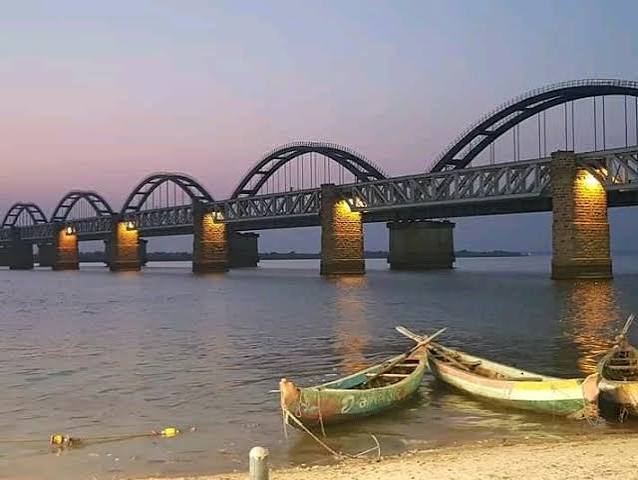
Near its lower course, the river passes through the Rajamahendravaram region and begins dividing into distributaries.
These channels create the fertile Godavari Delta before entering the Bay of Bengal.
Major Tributaries of the Godavari River
The Godavari has a large network of tributaries draining extensive areas of the Deccan Plateau and central India.
1. Pranhita River
- The Pranhita is one of the most important tributaries of the Godavari.
- It is formed by a large river network involving the Wardha and Wainganga rivers and contributes a substantial amount of water to the Godavari.
- Its catchment covers a vast region of central India.
2. Indravati River
- The Indravati River is another major tributary.
- It flows through parts of Odisha and Chhattisgarh before joining the Godavari. Its basin includes forested areas of central India, particularly the Bastar region.
3. Manjira River
- The Manjira River is an important tributary that flows through parts of Maharashtra, Karnataka and Telangana.
- Its water is used for irrigation and water supply in the region.
4. Sabari River
- The Sabari River flows through parts of Odisha, Chhattisgarh and Andhra Pradesh before joining the Godavari.
- It drains heavily forested and hilly areas.
5. Purna River
- The Purna is an important tributary of the Godavari in Maharashtra.
- It drains parts of the state’s interior before merging with the main river.
6. Pravara River
- The Pravara River originates in the Western Ghats of Maharashtra and joins the Godavari.
- It forms an important part of the upper Godavari basin.
Major tributaries to remember include:
- Pranhita
- Indravati
- Sabari
- Manjira
- Purna
- Pravara
Course of the Godavari from Origin to the Sea
The Godavari’s journey can broadly be divided into upper, middle and lower sections.
1. Upper Course
- The river begins at Trimbakeshwar and flows through Maharashtra. It passes through areas around Nashik before travelling eastwards across the Deccan Plateau.
- Several dams and reservoirs regulate water in the upper basin.
2. Middle Course
- As the river moves towards Telangana, it receives large tributaries and becomes significantly wider.
- The Pranhita, Indravati and other river systems contribute enormous catchment areas to the Godavari.
3. Lower Course
- After entering Andhra Pradesh, the river moves across increasingly flat terrain.
- Near the coast, the Godavari separates into distributaries, creating an extensive delta.
- These distributaries eventually empty into the Bay of Bengal.
Godavari Delta
The Godavari Delta is one of the most productive agricultural areas along India’s eastern coast.
As the river approaches the sea, it divides into multiple channels and deposits fine alluvial sediment.
This creates fertile land suitable for intensive agriculture.
Important crops grown in the delta region include:
- Paddy
- Coconut
- Banana
- Sugarcane
- Pulses
- Vegetables
The Godavari Delta, together with the nearby Krishna Delta, forms an important agricultural zone of Andhra Pradesh.
Major Dams and Projects on the Godavari System
Several large dams, barrages and irrigation projects have been developed across the Godavari basin.
Important examples include:
- Jayakwadi Dam – Maharashtra
- Sriram Sagar Project – Telangana
- Polavaram Project – Andhra Pradesh
- Dowleswaram Barrage – Andhra Pradesh
- Nizam Sagar – on the Manjira tributary
- Upper Indravati Project – Indravati basin
These projects are used for purposes such as:
- Irrigation
- Drinking water
- Hydroelectric power
- Flood management
- Water storage
- Regional development
Why Is the Godavari Called Dakshin Ganga?
The Godavari is popularly called the Dakshin Ganga, meaning the “Ganga of the South.”
The name reflects both its enormous geographical importance and its sacred status.
Like the Ganga in northern India, the Godavari is closely associated with religious traditions, pilgrimage centres and ritual bathing.
Important religious locations along the river include Trimbakeshwar, Nashik, Nanded, Basara and Bhadrachalam.
The river therefore has a strong cultural identity in addition to its agricultural and economic value.
Importance of the Godavari River
The Godavari is vital to a large part of central and southern India.
Its major benefits include:
- Agriculture: Irrigates extensive farmland across its basin.
- Drinking water: Provides water to cities, towns and villages.
- Hydropower: Supports electricity-generation projects.
- Fertile delta: Creates productive agricultural land in Andhra Pradesh.
- Religious significance: Several major pilgrimage centres are located along its course.
- Biodiversity: Supports forests, wetlands, fish and other aquatic ecosystems.
- Livelihoods: Farming, fishing and other activities depend on the river.
- Regional water management: Reservoirs and irrigation networks distribute water across large areas.
Because much of its flow depends on the monsoon, effective storage and management of Godavari water is particularly important during years of uneven rainfall.
FAQs About the Godavari River
Q1. Where does the Godavari River start and end?
A. The Godavari originates at Trimbakeshwar near Nashik in Maharashtra, in the Western Ghats. It travels eastwards across Peninsular India and finally enters the Bay of Bengal through its delta in Andhra Pradesh.
Q2. Which states does the main Godavari River flow through?
A. The main course of the Godavari flows primarily through Maharashtra, Telangana and Andhra Pradesh. Its wider basin also covers parts of Chhattisgarh, Madhya Pradesh, Odisha and Karnataka.
Q3. Is the Godavari longer than the Krishna River?
A. Yes. The Godavari is approximately 1,465 km long, while the Krishna River is about 1,400 km long. Therefore, the Godavari is generally regarded as the longest river in Peninsular India.
Q4. Which is the largest tributary of the Godavari?
A. The Pranhita River system is one of the Godavari’s most significant tributary systems and contributes a very large drainage area. It is formed mainly by the combined waters of the Wardha and Wainganga river systems before joining the Godavari.