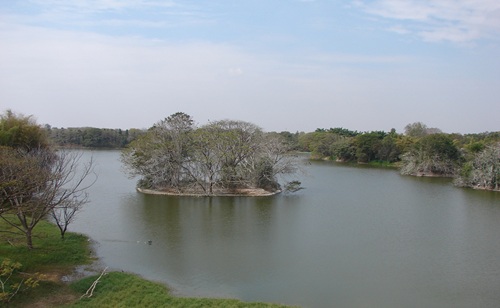
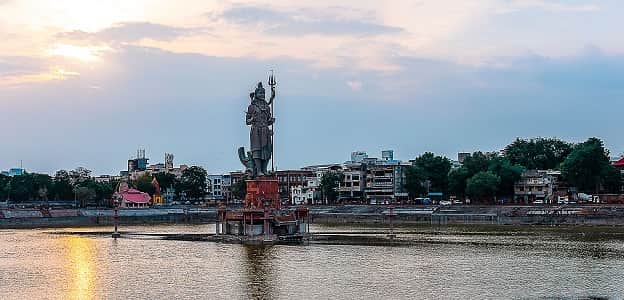
The Satluj River, also widely spelled Sutlej, is one of the most important rivers of northwestern India and the longest of the five historic rivers associated with Punjab. Beginning high on the Tibetan Plateau, the river crosses the Himalayas, enters India through Himachal Pradesh and eventually reaches the plains of Punjab. Its water supports agriculture, hydroelectric power generation, drinking-water systems and some of India’s most significant irrigation projects.
The Satluj is especially important because major projects such as the Bhakra-Nangal Project have transformed its water into a valuable resource for farming and electricity generation. After flowing through India, the river enters Pakistan, where it eventually combines with other rivers of the Indus system.
The Satluj is approximately 1,450 km long, although estimates vary depending on the source and method of measurement. Within India, its main course flows through Himachal Pradesh and Punjab, while its water is distributed much more widely through canals and irrigation networks. Understanding the Satluj’s origin, tributaries, route and importance provides a useful picture of both Himalayan geography and the Indus river system.
Satluj River Overview
| Particular | Details |
|---|---|
| River Name | Satluj / Sutlej River |
| River System | Indus River System |
| Source Region | Tibetan Plateau |
| Origin Area | Near Lake Rakshastal and the Kailash-Manasarovar region |
| Approximate Length | Around 1,450 km |
| Indian States Along Main Course | Himachal Pradesh and Punjab |
| Major Indian Tributaries | Spiti, Baspa and Beas |
| General Flow in India | West and southwest |
| Important Dam | Bhakra Dam |
| Major Project | Bhakra-Nangal Project |
| International River | Yes |
| Countries | China, India and Pakistan |
| Final River System | Indus River |
| Treaty Classification | Eastern River under the Indus Waters Treaty |
Where Does the Satluj River Originate?
The Satluj originates on the Tibetan Plateau, in the region near Lake Rakshastal and Lake Manasarovar, close to Mount Kailash.
The river begins at a very high altitude and flows westward through Tibet before reaching the Himalayan ranges.
In Tibet, the river is commonly known as Langqên Zangbo or by similar transliterations. After travelling through the Tibetan region, it enters India in Himachal Pradesh near Shipki La in Kinnaur district.
This makes the Satluj a transboundary river, as its course extends across China, India and Pakistan.
Important points about its origin:
- The Satluj originates on the Tibetan Plateau.
- Its source region is near Lake Rakshastal and the Kailash-Manasarovar area.
- It flows through Tibet before entering India.
- It enters India through Kinnaur district of Himachal Pradesh.
- It forms part of the larger Indus drainage system.
What Is the Length of the Satluj River?
The total length of the Satluj River is approximately 1,450 kilometres, though figures can differ slightly across geographical references.
A substantial part of its journey takes place across mountainous terrain in Tibet and Himachal Pradesh before the river enters the comparatively flatter Punjab plains.
The Satluj is regarded as the longest of the five historic rivers of Punjab.
These five rivers are:
- Jhelum
- Chenab
- Ravi
- Beas
- Satluj
Its long journey and large catchment make it an important source of water and hydropower in northern India.
Which States Does the Satluj River Flow Through in India?
The main Satluj River flows through two Indian states:
- Himachal Pradesh
- Punjab
Its waters, however, are distributed through major canal systems to agricultural regions extending beyond the river’s natural course.
Satluj River in Himachal Pradesh
The Satluj enters India near Shipki La in Kinnaur district, close to the India-China border.
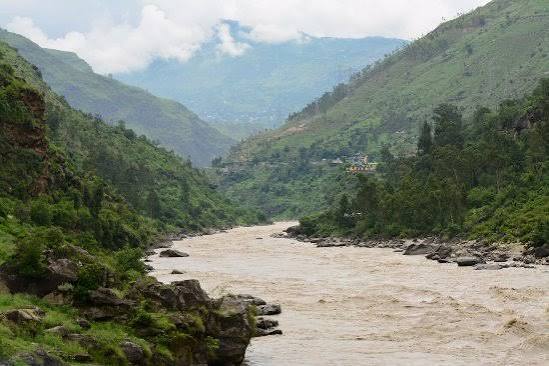
In its Himalayan course, the river passes through deep valleys and gorges. The steep gradient and strong flow make this section particularly suitable for hydroelectric power generation.
The Satluj passes through or is associated with districts such as:
- Kinnaur
- Shimla
- Kullu region
- Mandi
- Bilaspur
Several important tributaries join the river in Himachal Pradesh.
Large hydropower projects have also been developed along this mountainous section.
Satluj River in Punjab
After leaving the Himalayan region, the Satluj enters the plains of Punjab.
Its character changes considerably here. The river flows through flatter agricultural terrain where its water is extensively managed through dams, barrages and canals.
The Beas River joins the Satluj at Harike in Punjab. This confluence is particularly important because it combines two major rivers of the Indus system.
The Satluj later moves towards the India-Pakistan border and enters Pakistan.
Course of the Satluj River from Tibet to Pakistan
The journey of the Satluj can broadly be divided into four stages.
1.Upper Course in Tibet
- The river begins on the Tibetan Plateau near the Kailash-Manasarovar region and flows generally westward.
- This upper catchment lies at a high elevation and is influenced by snow, glaciers and limited high-altitude precipitation.
2. Himalayan Course in India
- The Satluj enters Himachal Pradesh near Shipki La.
- Here, the river cuts through the Himalayas, creating deep valleys and steep-sided gorges. Tributaries descending from snow-covered mountains join the main river.
3.Punjab Plains
- After emerging from the hills, the river reaches Punjab.
- The landscape becomes much flatter, and the river’s water is extensively used for irrigation.
- The Beas joins the Satluj at Harike, strengthening the river before it continues towards Pakistan.
4.Course in Pakistan
- After entering Pakistan, the Satluj continues southwestwards.
- It eventually joins the Chenab River system, and the combined waters ultimately become part of the Indus drainage network before reaching the Arabian Sea.
Major Tributaries of the Satluj River
Several Himalayan rivers and streams contribute to the Satluj.
1. Spiti River
- The Spiti River is one of the important tributaries of the Satluj in Himachal Pradesh.
- It drains the cold desert region of Spiti and flows through a dramatic high-altitude landscape before joining the Satluj in Kinnaur.
2. Baspa River
- The Baspa River flows through the famous Sangla Valley of Kinnaur.
- It is fed by snow and glacier melt and joins the Satluj near Karcham.
- The Baspa basin is also important for hydroelectric power generation.
3. Beas River
- The Beas is the largest and best-known tributary joining the Satluj in India.
- It originates near Beas Kund in Himachal Pradesh, flows through the state and enters Punjab.
- The Beas joins the Satluj at Harike.
Other Mountain Streams
Numerous smaller streams originating in the Himalayan region also contribute water to the Satluj.
Its flow is therefore influenced by:
- Snowmelt
- Glacier melt
- Monsoon rainfall
- Mountain tributaries
- Seasonal streams
Bhakra-Nangal Project on the Satluj River
The Bhakra-Nangal Project is one of the most famous multipurpose river projects in India.
The Bhakra Dam is constructed across the Satluj in Himachal Pradesh, close to the Punjab border.
The dam creates the large Gobind Sagar Reservoir.
The project has several important functions:
- Hydroelectric power generation
- Irrigation
- Water storage
- Regulation of river flow
- Support for agricultural development
Its canal network has played a major role in supplying irrigation water to northwestern India.
The availability of controlled irrigation contributed significantly to agricultural development in Punjab, Haryana and Rajasthan.
Hydroelectric Importance of the Satluj
The steep Himalayan course makes the Satluj particularly suitable for hydropower.
Several hydroelectric projects have been developed along the river and its tributaries.
Important projects in the Satluj basin include:
- Bhakra project
- Nathpa Jhakri Hydroelectric Station
- Karcham Wangtoo project
- Baspa hydropower projects
These projects use the river’s strong flow and steep elevation changes to generate electricity.
Satluj River and Agriculture
The Satluj is extremely important for irrigation, particularly in northwestern India.
Its water reaches agricultural areas through an extensive network of canals and water-management infrastructure.
Major crops supported by irrigation in the region include:
- Wheat
- Paddy
- Cotton
- Sugarcane
- Maize
- Pulses
- Mustard
- Vegetables
The river’s contribution to irrigation has made it closely connected with the agricultural economy of Punjab and neighbouring areas.
Satluj and the Indus Waters Treaty
The Satluj is one of the six major rivers covered by the Indus Waters Treaty of 1960 between India and Pakistan.
Under the treaty framework, the rivers are broadly classified into Eastern and Western Rivers.
Eastern Rivers:
- Ravi
- Beas
- Satluj
Western Rivers:
- Indus
- Jhelum
- Chenab
The Satluj is therefore classified as an Eastern River, making it particularly important for India’s water-resource development and irrigation infrastructure.
Why Is the Satluj River Important?
The Satluj has geographical, agricultural, economic and strategic importance.
Its major contributions include:
- Irrigation: Supplies water to extensive agricultural areas.
- Hydropower: Supports several major electricity-generation projects.
- Water storage: Large reservoirs help store and regulate river water.
- Agriculture: Supports major crops across northwestern India.
- Indus system: Forms an important part of the Indus drainage network.
- Punjab’s geography: It is one of the five historic rivers associated with Punjab.
- International importance: It flows across China, India and Pakistan.
- Water management: Its dams and canals form a major part of India’s irrigation infrastructure.
FAQs About the Satluj River
Q1. Where does the Satluj River originate and where does it end?
A. The Satluj originates on the Tibetan Plateau near the Lake Rakshastal-Kailash region. It flows through Tibet, Himachal Pradesh and Punjab before entering Pakistan, where its waters eventually become part of the larger Indus River system.
Q2. Which states does the Satluj River flow through in India?
A. The main Satluj River flows through Himachal Pradesh and Punjab in India. Its waters are also carried to other northwestern states through major irrigation and canal systems.
Q3. Where do the Beas and Satluj rivers meet?
A. The Beas River joins the Satluj at Harike in Punjab. The area around the confluence is also associated with the Harike wetland, an important freshwater ecosystem.
Q4. Are Sutlej and Satluj two different rivers?
A. No. Satluj and Sutlej are two English spellings for the same river. “Sutlej” is widely used internationally, while “Satluj” is also commonly used in India, including in geographical and official contexts.