A glass of dairy milk, a leather wallet and a meal containing eggs may seem unrelated, but all three involve animal-derived products. A vegan lifestyle involves making different choices about such products, extending beyond food to clothing, cosmetics and other everyday purchases. While people adopt veganism for various reasons, its potential environmental benefits have become an important part of discussions about sustainable living.
Food production contributes to greenhouse gas emissions, land use, freshwater consumption and biodiversity loss. Because animal agriculture is responsible for a substantial share of these impacts, replacing animal-derived foods with plant-based alternatives can reduce an individual’s environmental footprint. However, the environmental effects of veganism depend on what people consume, how products are produced and the resources required to transport and process them.
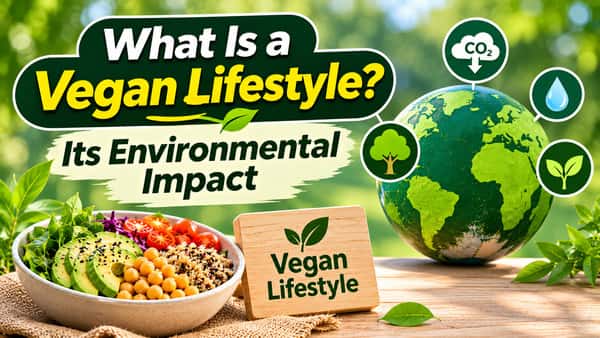
What Is a Vegan Lifestyle?
A vegan lifestyle involves avoiding animal-derived products, as far as possible and practicable, in food and other areas of daily life.
Unlike vegetarianism, which may include dairy products and eggs, veganism excludes foods obtained from animals.
Common examples include meat, fish, eggs, milk, cheese, butter and honey.
Vegans generally choose plant-based alternatives such as vegetables, fruits, grains, legumes, nuts, seeds and products made from soy or other plant ingredients.
Beyond food, veganism may influence clothing, personal care and household purchases. For example, someone following a vegan lifestyle may choose non-leather footwear and cosmetics that do not contain animal-derived ingredients.
The approach varies according to individual circumstances, product availability and practical limitations.
Why Do People Choose Veganism?
Environmental concerns are one motivation, but they are not the only reason people adopt veganism.
Some people want to avoid supporting practices involving animal exploitation. Others are interested in plant-based eating patterns or wish to align their purchases with personal values.
Environmental motivations commonly include reducing agricultural emissions, limiting land requirements and lowering the demand for resource-intensive animal products.
However, veganism should not be confused with environmental sustainability in every situation. A vegan product can still have a considerable environmental footprint depending on its ingredients, manufacturing process and packaging.
How Animal Agriculture Affects the Environment
Understanding veganism’s environmental impact requires examining how animal-based foods are produced.
Livestock farming uses land for grazing and growing animal feed. It also requires water, energy and infrastructure.
Ruminant animals, particularly cattle and sheep, produce methane during digestion. Methane is a powerful greenhouse gas that contributes to global warming.
Animal agriculture can also generate emissions through manure management, feed production, fertiliser use and land-use changes.
The environmental impact differs considerably between products.
Beef generally has a much higher greenhouse gas footprint than most plant-based protein sources, while poultry, eggs and dairy typically have lower emissions than beef but can still exceed many plant alternatives.
Vegan Lifestyle and Greenhouse Gas Emissions
One of the strongest environmental arguments for plant-based diets concerns greenhouse gas emissions.
Research comparing food production systems consistently finds that many plant-based foods generate fewer emissions per serving or unit of protein than animal-derived alternatives.
Producing meat often involves growing crops to feed animals before obtaining food for human consumption.
This additional conversion stage requires resources and can increase overall environmental impacts.
For example, replacing beef with lentils, beans or tofu can substantially reduce the emissions associated with a meal.
However, emissions also depend on farming methods, processing, refrigeration and transportation.
A vegan diet is not automatically carbon-neutral, but a well-chosen plant-based eating pattern can have a considerably lower food-related carbon footprint.
Land Use: Why Plant-Based Foods Often Require Less Space
Agricultural land is a limited resource.
Animal farming requires space for livestock and, in many systems, additional farmland for producing feed crops.
Plant-based foods can often provide nutrition using less land because crops are consumed more directly.
This difference is particularly significant for beef production.
Reducing demand for land-intensive animal products could potentially free agricultural land for other uses, including ecosystem restoration.
Restoring forests, grasslands and other natural habitats can support biodiversity and help store carbon.
However, these benefits depend on how land is actually managed after agricultural demand changes.
Simply reducing meat consumption does not guarantee that former farmland will automatically become a restored ecosystem.
Water Consumption and Vegan Diets
Agriculture accounts for a major share of global freshwater withdrawals.
Both plant and animal foods require water, but the amount varies considerably depending on the product and production region.
Some animal products have high water footprints because water is needed for animal drinking, feed cultivation and processing.
Plant-based foods such as lentils, beans and grains can be comparatively resource-efficient.
However, certain plant products, including almonds and some fruits, may require substantial irrigation in water-scarce regions.
This means environmental comparisons should consider local water availability rather than only the total litres used.
Choosing seasonal produce and supporting responsible agricultural practices can complement a plant-based lifestyle.
Environmental Comparison of Common Foods
The following table summarises broad environmental patterns. Actual impacts vary by farming system, location and production method.
| Food Category | Greenhouse Gas Impact | Land Requirement | Environmental Consideration |
|---|---|---|---|
| Beef | Generally very high | Very high | Methane emissions and land use |
| Lamb | Generally high | High | Methane and grazing requirements |
| Dairy Products | Moderate to high, depending on product | Significant | Livestock emissions and feed production |
| Poultry | Lower than beef, generally above many plant proteins | Moderate | Feed production and manure management |
| Beans and Lentils | Generally low | Relatively low | Efficient plant-based protein sources |
| Tofu | Generally low compared with beef | Relatively low | Soy cultivation and processing |
| Vegetables | Usually low per kilogram | Varies | Irrigation and greenhouse energy can matter |
| Nuts | Varies by type | Varies | Water use may be important |
Comparisons should also account for nutritional value. Foods differ in protein, energy and micronutrient content, so comparing equal weights does not always provide the most useful assessment.
Can Veganism Help Protect Biodiversity?
Biodiversity refers to the variety of living organisms and ecosystems.
Agricultural expansion is a major driver of habitat loss in many regions.
Forests and other natural habitats may be cleared for grazing or growing crops used as animal feed.
Reducing demand for land-intensive foods can help lower pressure for agricultural expansion.
This creates opportunities to protect wildlife habitats and support ecosystem conservation.
Nevertheless, plant agriculture can also damage biodiversity when it involves deforestation, excessive pesticide use or monoculture farming.
A more environmentally responsible food system therefore requires sustainable agricultural practices alongside changes in consumption.
Is Every Vegan Product Environmentally Friendly?
Not necessarily.
Vegan products can still involve intensive manufacturing, plastic packaging, long supply chains and resource-intensive ingredients.
For example, a highly processed plant-based snack may require more packaging and industrial processing than locally prepared vegetables or grains.
Similarly, synthetic leather avoids animal-derived materials but may be manufactured from petroleum-based plastics.
Such products can create waste and pollution concerns.
The environmental impact of vegan alternatives should therefore be evaluated individually rather than assuming that every product labelled vegan is sustainable.
Veganism and Food Waste
Food waste is another important environmental issue.
When food is discarded, the land, water, energy and labour used to produce it are also wasted.
A vegan household can still generate significant food waste through overbuying, improper storage or unused ingredients.
Practical habits such as planning meals, storing vegetables correctly and using leftovers can reduce waste.
These actions are beneficial regardless of whether someone follows a vegan, vegetarian or omnivorous diet.
Reducing food waste complements sustainable eating because it lowers unnecessary demand for agricultural resources.
Challenges of Adopting a Vegan Lifestyle
Switching to veganism can require changes in shopping, cooking and meal planning.
People may need to identify alternatives to familiar dairy products, eggs and meat-based dishes.
Social occasions and restaurant menus can also present challenges, particularly where plant-based options are limited.
Nutritional planning is important because a vegan diet must provide adequate protein, iron, calcium, vitamin D, iodine and other essential nutrients.
Vitamin B12 requires particular attention, as reliable sources in vegan diets generally come from fortified foods or supplements.
For children, teenagers, pregnant individuals and people with specific medical needs, guidance from a qualified healthcare professional or registered dietitian can help ensure nutritional adequacy.
How to Make Plant-Based Choices More Sustainable
Environmental benefits do not depend solely on excluding animal products.
Food selection and everyday habits also matter.
Practical approaches include:
- Choosing a variety of vegetables, fruits, grains and legumes.
- Using beans, lentils and other plant proteins in everyday meals.
- Buying seasonal produce when practical.
- Reducing unnecessary food packaging.
- Planning meals to prevent food waste.
- Considering the durability and manufacturing impact of non-food purchases.
- Supporting producers that follow responsible agricultural practices.
These habits can reduce environmental impacts without requiring expensive specialty products.
Vegan Lifestyle in the Indian Context
India has a long tradition of plant-based dishes built around lentils, vegetables, rice, wheat and regional grains.
Foods such as dal, chana, rajma, vegetable curries and many traditional snacks can form part of vegan meals when prepared without dairy or other animal-derived ingredients.
However, Indian vegetarian food frequently includes ghee, paneer, curd and milk.
People adopting veganism may replace these ingredients with suitable plant-based alternatives.
Traditional dishes can often be adapted without relying heavily on packaged vegan products.
The environmental benefits will depend on ingredient choices, agricultural practices and the overall balance of the diet.
Frequently Asked Questions
Q1. What is the difference between vegan and vegetarian lifestyles?
A. Vegetarians generally avoid meat and fish but may consume dairy products and eggs. Vegans avoid animal-derived foods and typically extend this approach to clothing, cosmetics and other purchases wherever practical.
Q2. How does veganism help the environment?
A. Plant-based diets can reduce food-related greenhouse gas emissions, agricultural land requirements and pressure on natural habitats, particularly when they replace resource-intensive animal products such as beef.
Q3. Does a vegan diet use less water?
A. Many plant-based foods have lower water requirements than certain animal products. However, water consumption varies by crop, farming method and location, so not every vegan food has a low water footprint.
Q4. Are vegan products always sustainable?
A. No. Vegan products can still involve high energy consumption, plastic packaging, intensive farming or resource-heavy manufacturing. Environmental sustainability depends on the entire production process.
Q5. Can a vegan lifestyle provide adequate nutrition?
A. A well-planned vegan diet can provide adequate nutrition, but it requires attention to essential nutrients, especially vitamin B12. Fortified foods or supplements may be necessary, and professional nutritional guidance can be helpful for people with additional dietary needs.