A packet of cooking oil, a bowl of cornflakes or a shipment of imported soybeans may look like ordinary food, but behind some agricultural products lies one of the most closely regulated areas of modern food production: genetically modified (GM) crops and foods. Before a GM crop can be cultivated or a GM food can enter the market in many countries, regulators may examine questions involving human health, environmental impact, agricultural use, imports and labelling.
What makes the subject especially interesting is that there is no single global system for regulating genetically modified food. The United States, European Union, India, Canada, Australia, Japan, Brazil and other jurisdictions use different legal frameworks and regulatory philosophies. Some focus heavily on the characteristics of the final product, while others place greater emphasis on how it was produced. Labelling requirements also vary considerably.
For Indian consumers, understanding these differences is useful because food supply chains are increasingly international. Crops or ingredients produced under one country’s biotechnology rules can eventually enter global trade, making GM regulation an international food-policy issue rather than purely a scientific debate.
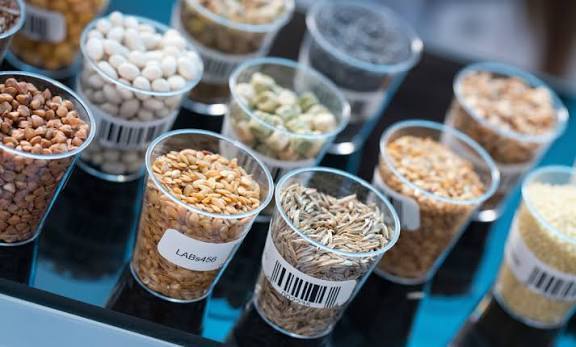
GM Food Regulation Around the World – Quick Overview
| Country/Region | General Regulatory Approach | Pre-Market Assessment | GM Labelling Approach |
|---|---|---|---|
| India | Multi-agency regulatory framework | Required for regulated GM products | Labelling requirements apply under relevant rules |
| United States | Product/risk-based, multiple agencies | Depends on product and regulatory authority | Bioengineered food disclosure framework |
| European Union | Highly regulated authorisation system | Required | Mandatory rules with defined thresholds/exceptions |
| Canada | Focus on novel characteristics | Safety assessment for novel foods | Mandatory in specified health/safety situations; voluntary standards also exist |
| Australia/New Zealand | Central food-standard framework | Pre-market safety assessment | Mandatory labelling rules with exemptions |
| Japan | Safety assessment framework | Required for covered GM foods | Mandatory labelling for specified categories |
| Brazil | Biotechnology regulatory framework | Assessment/approval required | GM labelling requirements apply |
| China | Government approval and biosafety controls | Required | Labelling applies to specified GM products |
What Exactly Is Being Regulated?
The phrase “GM food regulation” can refer to several different stages.
Governments may regulate:
- Laboratory research
- Field trials
- Environmental release
- Commercial cultivation
- Import and export
- Animal-feed use
- Food use
- Processing
- Labelling
- Traceability
A crop being approved for one purpose does not automatically mean it is approved for every purpose in every country.
For example, authorities may separately consider whether a genetically modified crop can be cultivated commercially and whether food derived from it can be legally sold for human consumption.
This is one reason GM regulation can appear complicated.
How Regulators Assess GM Food Safety
Although regulatory systems differ, food-safety assessments generally examine the characteristics of the particular genetically modified product rather than assuming all GM foods are identical.
Depending on the product, authorities may consider areas such as:
- What genetic change was introduced
- How the modification changes the plant
- Composition of the resulting food
- Potential toxicity
- Potential allergenicity
- Nutritional characteristics
- Stability of the introduced trait
- Intended use
Environmental authorities may separately evaluate issues such as effects on other organisms, gene flow and agricultural ecosystems.
Approval therefore usually relates to a specific crop, trait or product, not to genetic modification as one universal category.
How GM Food Is Regulated in India
India uses a multi-layered system involving environmental, biotechnology and food-safety regulation.
One of the central bodies involved in environmental approval is the Genetic Engineering Appraisal Committee (GEAC) under the Ministry of Environment, Forest and Climate Change.
India’s biotechnology framework also involves institutional and government bodies at different stages of research and biosafety oversight.
For food entering the human food supply, the Food Safety and Standards Authority of India (FSSAI) plays an important regulatory role.
This means GM regulation can involve different authorities depending on whether the issue is:
- Research
- Field testing
- Environmental release
- Cultivation
- Import
- Food processing
- Retail sale
India has historically taken a cautious approach to the commercial cultivation of GM food crops.
Bt cotton is the country’s major commercially cultivated GM crop, but it is primarily a fibre crop rather than a food crop grown for direct human consumption.
GM food regulation and proposed approvals have generated substantial scientific, agricultural, environmental and public-policy debate in India.
GM Food Labelling in India
Labelling is important because regulation is not only about whether a food passes safety requirements. Consumers may also want information about how food was produced.
India has introduced food-labelling requirements covering genetically modified ingredients under its food regulatory framework.
For manufacturers and importers, compliance can involve determining whether a product falls within applicable GM food rules and whether specific declarations are required.
For consumers, the practical lesson is straightforward:
Read the actual food label rather than relying on marketing terms such as “natural” or “healthy.”
Regulatory definitions and thresholds matter more than front-of-pack advertising language.
The United States: Multiple Agencies Share Responsibility
The United States uses a coordinated regulatory system involving several federal agencies.
Three particularly important agencies are:
- FDA – food and feed safety
- USDA – agricultural and plant-related oversight
- EPA – certain pesticidal substances produced by plants and related pesticide issues
Which authority is involved depends on the characteristics and intended use of the product.
The United States also has a National Bioengineered Food Disclosure Standard, which establishes disclosure requirements for covered bioengineered foods.
This illustrates an important difference in terminology: consumers may see “bioengineered” used in American regulatory contexts rather than simply “GMO.”
European Union: A More Precautionary Framework
The European Union is known for having a comparatively strict regulatory system for genetically modified organisms.
GM food and feed generally require authorisation before being placed on the EU market.
Scientific risk assessment plays an important role, with the European Food Safety Authority (EFSA) evaluating relevant evidence.
EU rules also place considerable emphasis on:
- Authorisation
- Traceability
- Labelling
- Monitoring
- Consumer information
The EU’s approach is frequently described as more precautionary than the American system.
Labelling is generally required for authorised GM food and feed under applicable conditions, although rules include thresholds and exemptions for certain situations such as technically unavoidable traces.
Individual EU countries may also have significant policy differences concerning cultivation.
Canada Focuses on “Novel Foods”
Canada provides an interesting contrast because its regulatory framework focuses strongly on whether a food has novel characteristics, rather than treating the breeding method as the only deciding factor.
Health Canada assesses novel foods for safety before they enter the market where applicable.
Assessments can examine:
- Nutritional composition
- Potential toxins
- Allergens
- Chemical changes
- Dietary exposure
This product-oriented approach demonstrates that countries can regulate biotechnology through different legal concepts while still requiring scientific assessment.
Canada’s labelling framework also differs from the EU’s broad mandatory GM-labelling model.
Australia and New Zealand
Australia and New Zealand share a food-standards system administered through Food Standards Australia New Zealand (FSANZ).
GM foods covered by the framework require safety assessment and approval before entering the food supply.
The assessment can consider issues such as:
- Genetic modification
- Nutritional composition
- Toxicology
- Potential allergenicity
- Intended use
Approved GM foods are also subject to labelling requirements, with specific exemptions and technical conditions.
This approach combines pre-market scientific assessment with consumer information requirements.
Japan’s Approach to GM Foods
Japan requires safety assessment for genetically modified foods that fall within its regulatory system.
It also has labelling requirements for designated genetically modified agricultural products and certain processed foods.
Japan is a major food importer, making regulation particularly important for international agricultural trade.
As with other jurisdictions, the exact labelling requirement depends on factors such as the ingredient, product category and applicable standards.
Therefore, a simple claim that “all GM food is labelled everywhere” would be inaccurate.
Brazil: A Major GM Crop Producer
Brazil is one of the world’s important producers of genetically modified agricultural commodities, including soybean and maize.
Its biotechnology regulatory framework includes the National Technical Commission on Biosafety (CTNBio), which plays an important role in evaluating biotechnology and biosafety issues.
Brazil also has rules concerning GM food labelling.
Its experience demonstrates an important point: strict regulatory assessment and large-scale GM agriculture are not necessarily opposites.
A country can extensively cultivate biotechnology crops while still operating formal approval and biosafety systems.
China and GM Food Regulation
China regulates genetically modified organisms through government approval and agricultural biosafety systems.
Its framework covers activities such as:
- Research
- Testing
- Production
- Processing
- Importation
- Labelling of specified products
China is particularly important in the global discussion because of the enormous scale of its agricultural production and food market.
Its biotechnology policy has continued to evolve as the country develops and evaluates new crop technologies.
Why GM Labelling Rules Differ So Much
Countries disagree not only about safety regulation but also about what consumers should be told on the package.
Some jurisdictions require broad mandatory disclosure for qualifying GM foods. Others use more targeted requirements.
Different systems may consider:
- Percentage thresholds
- Detectability of modified genetic material
- Highly refined ingredients
- Accidental presence
- Processing methods
- Product category
This means the same food ingredient could potentially require different labelling depending on the country where it is sold.
For multinational food companies, complying with multiple systems can therefore be complex.
GM Foods vs Gene-Edited Foods: The Next Regulatory Challenge
Newer gene-editing technologies have made the regulatory picture even more complicated.
Traditional genetic engineering can introduce genetic material in ways that differ from conventional breeding. Newer techniques such as CRISPR can sometimes make precise changes without leaving foreign DNA in the final plant.
Countries do not regulate all gene-edited products in exactly the same way.
Some may exempt certain gene-edited plants from parts of traditional GMO regulation when the resulting genetic change could theoretically have occurred through conventional breeding. Others may apply additional approval requirements.
As biotechnology develops, regulators increasingly face the question:
Should regulation depend primarily on the technology used or on the characteristics and risks of the final product?
That debate is likely to shape future food regulation.
Why There Is No Single Global GMO Law
Food regulation reflects more than scientific assessment.
Countries also consider:
- Agricultural policy
- Environmental protection
- Consumer preferences
- International trade
- Farmer interests
- Food security
- Domestic politics
- Ethical concerns
International organisations can develop guidelines and frameworks, but individual countries retain authority over their own food and agricultural systems.
This is why one GM crop may be commercially cultivated in one country, permitted only for import in another and face much tighter restrictions elsewhere.
For consumers, the most important takeaway is that “GM approved” is not a universal global status. Approval is specific to a product, purpose and jurisdiction.
FAQs
Q1. Are genetically modified foods legally allowed in India?
GM organisms and foods are subject to regulatory approval in India rather than being automatically permitted. Different authorities may be involved depending on whether the activity concerns research, environmental release, cultivation, import or human food.
Q2. Does every country require GM foods to carry a label?
No. Labelling systems vary significantly. Some jurisdictions have broad mandatory requirements, while others use different disclosure standards, thresholds or exemptions. The same ingredient may therefore be labelled differently across countries.
Q3. Does regulatory approval mean every GM crop can be grown anywhere?
No. Food approval, import approval and commercial cultivation are separate regulatory questions. A GM product authorised for one use or country is not automatically approved for cultivation or sale everywhere else.
Q4. Are gene-edited foods regulated exactly like traditional GM foods?
Not always. Regulatory treatment of gene-edited crops differs between countries and can depend on the type of genetic change involved. This is an evolving area of biotechnology law, so requirements can change as governments update their regulatory frameworks.