In many Indian homes, food is rarely just about satisfying hunger. A mother packing an extra paratha in a child’s tiffin, grandparents insisting that everyone eat before leaving, neighbours exchanging sweets during festivals, or relatives arriving with homemade pickles all communicate something beyond taste. They express care, belonging, hospitality and connection.
This is why sharing food occupies such an important place in Indian family life. Recipes travel from grandparents to grandchildren, festival dishes bring extended families together, and even an ordinary cup of chai can become an invitation to sit and talk. Across India’s enormous diversity of languages, religions and regional cuisines, offering food remains one of the most recognisable forms of hospitality.
Modern lifestyles are changing when and how families eat together, especially in cities. Yet the cultural meaning of sharing food remains remarkably strong. From everyday dinner tables to weddings and religious gatherings, food continues to help Indians maintain relationships, preserve memories and create a sense of community.

Sharing Food in Indian Culture – At a Glance
| Tradition | Cultural Meaning | Common Example |
|---|---|---|
| Family Meals | Togetherness and communication | Dinner eaten together |
| Serving Others | Care and affection | Offering another roti or serving |
| Guest Hospitality | Respect and welcome | Tea, snacks or a full meal |
| Festival Food | Celebration and identity | Mithai, modak, gujiya |
| Community Meals | Equality and belonging | Langar and communal feasts |
| Tiffin Sharing | Friendship and social bonding | School or office lunches |
| Family Recipes | Passing down heritage | Grandmother’s pickle or curry |
| Food Gifting | Maintaining relationships | Sweets during festivals |
| Religious Offerings | Faith and sharing | Prasad |
| Wedding Feasts | Celebration and social connection | Large family/community meals |
Food Is One of India’s Most Familiar Languages of Care
Indian families do not always express affection verbally. Sometimes care arrives on a plate.
“Have you eaten?” can function almost like “How are you?”
Parents may remember exactly how a child likes dal prepared. Grandparents may keep a favourite snack ready for visiting grandchildren. Someone travelling home from another city may be greeted with the meal they have missed most.
These actions turn food into a form of emotional communication.
Small gestures matter:
- Saving the best piece for someone
- Packing food for a journey
- Sending a meal to an unwell relative
- Preparing a favourite dish for a birthday
- Offering fruit or tea to a visitor
- Making extra food because someone might arrive
The nutritional value of the meal matters, but culturally, the act of providing it can carry just as much meaning.
The Family Dining Table Is a Social Space
Traditionally, family meals provide an opportunity for household members to come together after spending the day on different activities.
The setting differs from home to home. Some families eat around a dining table, others sit together in the kitchen or another shared space, and schedules may mean that not everyone eats simultaneously.
When families do eat together, meals can create opportunities to:
- Discuss the day
- Share family news
- Make plans
- Teach children table manners
- Introduce younger generations to traditional foods
- Strengthen relationships
A family meal is therefore not merely a serving arrangement.
It is a repeated social ritual.
Even disagreements over who gets the last gulab jamun can become part of the memories families carry for years.
Sharing Food Teaches Children About Family Identity
Children learn culture through everyday experiences long before they understand it academically.
Food is one of the easiest ways for this transmission to happen.
A child watching a parent prepare a regional dish learns about ingredients, cooking techniques and family preferences. When grandparents explain why a particular sweet is prepared during a festival, food becomes a lesson in history and tradition.
Children may learn:
- Which foods belong to particular festivals
- How family recipes are prepared
- Why certain foods are eaten during particular seasons
- How meals differ between regions
- How guests are traditionally welcomed
- Which dishes have special family memories
These lessons are rarely delivered formally.
They happen while rolling rotis, cleaning rice, preparing chutney or sitting together during a festival meal.
Indian Hospitality Often Begins With Food
A guest entering an Indian home is commonly offered something to eat or drink.
It may be as simple as:
- Water
- Chai
- Coffee
- Biscuits
- Namkeen
- Fruit
- Mithai
If the visit overlaps with a meal, the invitation may quickly expand into lunch or dinner.
The familiar insistence—“Have a little more”—reflects a deeply established idea that guests should be well fed.
Hospitality varies across communities and households, but generosity with food remains widespread.
Importantly, the value of hospitality is not determined by how expensive the meal is.
A cup of homemade tea offered warmly can communicate more genuine welcome than an elaborate restaurant dinner.
Festivals Turn Food Into Shared Memory
Indian festivals demonstrate the connection between food and culture particularly clearly.
Many celebrations have dishes that immediately evoke the occasion.
Examples include:
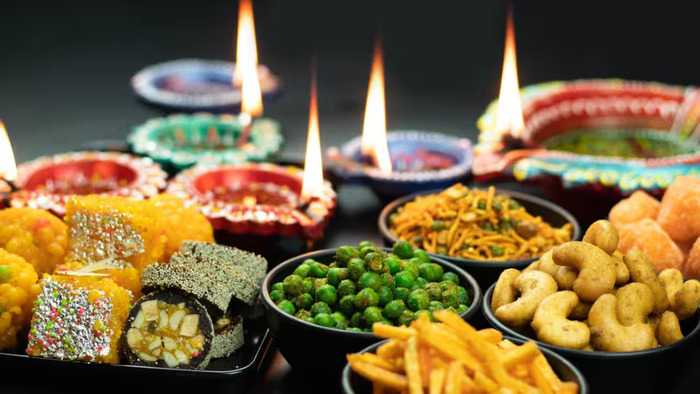
- Diwali: mithai, laddoo and regional savoury preparations
- Holi: gujiya and other festive foods
- Ganesh Chaturthi: modak
- Pongal: sweet and savoury pongal preparations
- Makar Sankranti: sesame and jaggery sweets in several regions
- Onam: sadya
- Eid: sheer khurma and festive meals
- Christmas: cakes and regional Christian specialities
The preparation itself can become a family event.
One person kneads dough, another prepares filling, someone fries or shapes sweets, while children wait impatiently to taste the first batch.
When these foods are repeated year after year, taste becomes connected with memory.
A particular aroma can bring back childhood celebrations decades later.
Food Gifting Maintains Relationships
During Indian festivals and major life events, food frequently moves between households.
Families exchange boxes of sweets, homemade snacks, fruits and regional specialities.
This exchange performs an important social function.
It says:
“We remembered you, and you are part of our celebration.”
Food gifting can strengthen relationships between:
- Relatives
- Friends
- Neighbours
- Colleagues
- Business associates
Homemade foods can carry particularly strong emotional value because they represent time and effort.
A jar of pickle sent by a parent to a child living in another city is not merely a condiment. It can be a small piece of home travelling hundreds of kilometres.
Tiffin Sharing Creates Everyday Friendships
One of the most relatable examples of Indian food sharing happens at school.
A child’s lunch box may begin the day containing food from one household and end with several friends having tasted it.
One student brings aloo paratha, another idli, another poha, and someone else a sandwich. Sharing exposes children to foods outside their own family traditions.
The same phenomenon happens in workplaces.
Office lunch breaks often involve colleagues tasting one another’s homemade meals.
This informal exchange can:
- Start conversations
- Build friendships
- Introduce regional cuisines
- Create social comfort
- Reduce barriers between people
India’s linguistic and regional diversity becomes surprisingly easy to explore when everyone opens their lunch boxes.
Community Meals Extend the Idea Beyond Family
Indian traditions of food sharing extend far beyond individual households.
One of the strongest examples is langar, the community kitchen tradition particularly associated with Sikh gurdwaras.
People from different social and economic backgrounds can sit together and share a meal.
Various religious and community traditions across India also organise:
- Bhandaras
- Temple meals
- Festival feasts
- Community kitchens
- Prasad distribution
- Meals during religious gatherings
In such settings, food can represent service, generosity and community participation.
Sharing the same meal can temporarily reduce social distinctions and emphasise collective belonging.
Weddings Use Food to Bring Communities Together
Indian weddings may differ dramatically by region, religion and family background, but food almost always occupies a central position.
The wedding feast allows relatives and friends—sometimes arriving from distant places—to share the celebration physically.
Menus can also communicate identity.
A wedding in Rajasthan may showcase different flavours from one in Kerala, Punjab, Bengal or Gujarat.
Modern weddings increasingly mix regional and international cuisines, yet guests still remember the food.
The feast becomes part of the family’s hospitality and a shared memory of the event.
Family Recipes Preserve History Without Being Written Down
Many valuable Indian recipes have never appeared in a cookbook.
They survive because someone watches someone else cook.
A grandmother may measure spices by hand rather than teaspoons. A mother may know when a dough is ready simply by touching it.
Such knowledge is passed through observation and repetition.
Family recipes preserve:
- Regional techniques
- Ingredient combinations
- Seasonal practices
- Migration histories
- Personal preferences
- Memories of previous generations
When younger family members learn these recipes, they are preserving more than cooking instructions.
They are maintaining a connection with people who may no longer be physically present.
Sharing Food Has Changed in Urban India
Modern Indian households often face schedules very different from those of previous generations.
Long commutes, shift work, school activities, food delivery and smaller nuclear families can make traditional shared meals harder to maintain.
Not every family can eat breakfast and dinner together daily.
However, food sharing has adapted rather than disappeared.
Modern versions include:
- Weekend family breakfasts
- Ordering everyone’s favourite dishes together
- Video-calling relatives while cooking traditional recipes
- Sending food to family through delivery services
- Hosting potluck meals
- Exchanging recipes through family WhatsApp groups
The format changes, but the underlying desire to connect through food remains.
Why Sharing Food Still Matters
Food creates a natural reason for people to stop what they are doing and spend time together.
It does not require a formal occasion.
Families can preserve the habit through simple actions:
- Try to share at least some meals without screens.
- Involve children in cooking.
- Teach one traditional family recipe at a time.
- Eat regional foods and explain their stories.
- Share excess food responsibly rather than wasting it.
- Respect different dietary preferences within the family.
- Use festival cooking as an opportunity to involve multiple generations.
Food traditions should also evolve with families. Dietary restrictions, allergies, health conditions and personal choices deserve respect.
The cultural value lies in sharing and caring, not forcing someone to eat something they cannot or do not wish to consume.
Ultimately, an Indian family meal can be ordinary in ingredients but extraordinary in meaning. Dal, rice, sabzi and roti placed in the centre of a table may represent routine on one level, but on another, they represent belonging—the repeated message that there is a place for everyone at the meal.
FAQs
Q1. Why is offering food to guests so important in Indian culture?
A. Offering food is traditionally associated with hospitality, generosity and respect. Even when a full meal is not possible, tea, water, fruit or a small snack can serve as a gesture of welcome.
Q2. How can busy families maintain the tradition of eating together?
A. Families do not necessarily need every meal to be shared. A regular weekend breakfast, dinner on selected days or cooking together occasionally can still create meaningful family routines. Consistency matters more than trying to recreate an idealised traditional schedule.
Q3. Why are particular foods strongly connected with Indian festivals?
A. Festival foods developed through combinations of religious symbolism, seasonal ingredients, agricultural cycles and regional customs. Repeating the same dishes across generations eventually connects their taste and aroma strongly with the celebration.
Q4. How can parents pass traditional food culture to children who prefer modern foods?
A. Rather than forcing traditional dishes, involve children in shopping, cooking and family stories. Let them help make one festival dish or learn a grandparent’s recipe. Traditional and modern foods can coexist, allowing cultural knowledge to continue without making mealtimes a conflict.