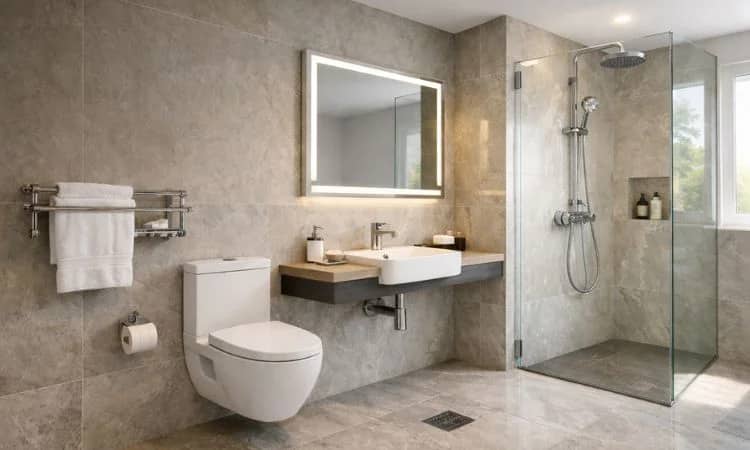
Modern Indian bathrooms are becoming cleaner, simpler and more thoughtfully planned. Instead of exposing every pipe, valve and cistern, many homeowners now prefer bathrooms where most functional components remain hidden behind the wall. What stays visible is usually limited to neatly designed handles, flush plates, spouts and shower controls. This shift explains the growing popularity of concealed bathroom fittings.
Concealed fittings are now seen in premium apartments, renovated homes, hotels and increasingly even compact urban bathrooms. Their appeal goes beyond appearance. They can reduce visual clutter, make some surfaces easier to clean and help use available space efficiently.
However, concealed does not mean maintenance-free. Because important components are installed behind walls or within service cavities, product quality, correct installation and future access become extremely important. A properly planned concealed system can provide years of convenient use, while poor installation can turn a small plumbing issue into an expensive repair.
What Are Concealed Bathroom Fittings?
Concealed bathroom fittings are systems in which much of the functional plumbing hardware is installed inside a wall, duct or purpose-built cavity.
Only the components required for operation or appearance remain visible.
Common examples include:
- Concealed shower mixers
- Concealed diverters
- Concealed shower valves
- Concealed cisterns
- Wall-hung toilet frames
- Flush plates
- Concealed basin mixers
- Built-in shower systems
For example, with a concealed shower diverter, the valve body and pipe connections remain inside the wall while only the handle and decorative faceplate are visible.
Similarly, a concealed toilet cistern hides the water tank behind the wall, leaving the toilet bowl and flush plate visible.
1. They Create a Clean, Minimalist Bathroom
Appearance is one of the biggest reasons concealed fittings have become popular.
Traditional exposed plumbing can leave multiple pipes, connectors and valves visible. While perfectly functional, these components can make a bathroom appear visually busy.
Concealed systems hide much of this hardware.
The result is a cleaner design with greater emphasis on:
- Tiles
- Stone surfaces
- Sanitaryware
- Shower heads
- Mirrors
- Lighting
- Selected metal finishes
This works particularly well with contemporary interiors where simple lines and uncluttered surfaces are preferred.
2. They Can Make Compact Bathrooms Feel More Spacious
Urban Indian homes increasingly need to make efficient use of limited bathroom space.
A concealed fitting does not magically increase the room’s dimensions, but reducing bulky visible components can make the space feel more open.
A wall-hung toilet with a concealed cistern is a good example.
The tank is hidden, and the bowl is mounted above the floor. This creates a cleaner visual line and exposes more flooring.
Similarly, concealed shower controls reduce the amount of hardware projecting from the wall.
These details can be particularly valuable in:
- Apartment bathrooms
- Powder rooms
- Guest bathrooms
- Narrow shower areas
Good layout planning remains more important than the fitting type alone, but concealed systems can support a space-efficient design.
3. Bathroom Cleaning Can Become Easier
Bathrooms need frequent cleaning, particularly in Indian households where wet cleaning is common.
Exposed pipes and fittings create additional surfaces, joints and corners where:
- Dust
- Soap residue
- Mineral deposits
- Moisture
can accumulate.
By hiding some of these components, concealed fittings can reduce the number of exposed surfaces that require cleaning.
Wall-hung toilets are especially convenient because the floor underneath the bowl remains accessible.
However, concealed fittings are not automatically maintenance-free. Visible handles, flush plates, shower heads and outlets still need regular cleaning.
Hard-water deposits can also affect internal cartridges and valves.
4. They Give Designers Greater Freedom
Concealed plumbing allows designers to focus on where users need the controls and outlets rather than making every component visually prominent.
A modern shower area might include:
- Ceiling-mounted rain shower
- Hand shower
- Wall spout
- Concealed mixer
- Diverter controls
The supply pipes connecting these components can remain hidden.
This gives homeowners greater flexibility to create spa-inspired bathrooms without covering the walls with exposed plumbing.
However, this design freedom requires careful planning before construction.
Once tiles are installed, moving a concealed fitting becomes much more difficult.
5. Concealed Cisterns Support Wall-Hung Toilets
The rise of wall-hung toilets has contributed significantly to the popularity of concealed bathroom systems.
In this arrangement, the cistern is installed within a wall or service structure. Depending on the system, a supporting frame may also carry the toilet bowl.
Only the bowl and flush plate remain prominently visible.
Potential benefits include:
- Cleaner appearance
- Easier floor cleaning
- Adjustable installation planning
- Reduced visual bulk
- Contemporary styling
The supporting structure and fixing system must be installed correctly according to manufacturer requirements.
A wall-hung toilet should never rely on improvised wall fixing.
6. Concealed Shower Systems Offer Multiple Functions
Bathrooms today often include more than one shower outlet.
A user may want a rain shower for relaxing baths and a handheld shower for targeted rinsing.
A concealed diverter can provide a neat way to control these outlets.
Depending on the system, controls may manage:
- Water temperature
- Water flow
- Outlet selection
Some premium systems may allow selected outlets to operate together, although this requires sufficient water pressure, flow and hot-water capacity.
Always check the product’s exact functions instead of assuming every concealed shower valve operates the same way.
7. A Wide Range of Finishes Is Available
Because only selected parts remain visible, those components can become intentional design features.
Concealed fitting trim is available in finishes such as:
- Chrome
- Matte black
- Brushed metallic finishes
- Gold-toned finishes
- Other decorative finishes
This allows homeowners to coordinate shower controls with taps, towel accessories and other bathroom details.
For long-term use, however, finish durability matters more than current fashion.
Aggressive cleaners, hard-water scale and abrasive scrubbing can damage some decorative surfaces.
Follow the manufacturer’s cleaning recommendations.
8. Concealed Does Not Mean Impossible to Repair
A common concern is: “Will I have to break the tiles if something goes wrong?”
For quality concealed systems, many regularly serviceable components are designed to be accessed from the front.
For example, a plumber may be able to remove the:
- Handle
- Trim plate
- Flush plate
- Serviceable cartridge
without damaging the wall.
Concealed cisterns may provide access to certain internal parts through the flush-plate opening.
However, accessibility varies by product.
A damaged concealed valve body or leaking pipe connection behind the wall may require greater intervention.
This is why correct installation and pressure testing before tiling are essential.
9. Installation Quality Becomes More Important
With an exposed fitting, installation errors are often easier to see and access.
With concealed plumbing, mistakes may be hidden.
The installer needs to correctly manage:
- Valve orientation
- Hot and cold connections
- Finished-wall depth
- Pipe alignment
- Waterproofing
- Supporting frames
- Drain positions
- Service access
- Pressure testing
The manufacturer’s installation instructions should ideally be available before plumbing work begins.
Do not allow tiling to proceed until concealed water lines and connections have been appropriately tested.
10. Product Quality and Spare Parts Matter
A concealed valve may remain inside your bathroom wall for many years.
Choosing solely on the lowest price can therefore be risky.
Before purchasing, investigate:
- Warranty
- Cartridge quality
- Replacement-part availability
- Local service support
- Compatibility between concealed body and trim
- Manufacturer reputation
- Service accessibility
Decorative external trim may be replaceable, but compatibility is not universal.
If you expect to change the bathroom’s appearance later, ask whether alternative trim options will remain compatible with the installed concealed body.
11. Concealed Fittings Can Cost More Initially
Concealed bathroom systems can have a higher upfront cost than simple exposed alternatives.
The total cost may include:
- Concealed valve or cistern
- External trim
- Supporting frame
- Additional plumbing
- Wall preparation
- Skilled installation
- Waterproofing
- Future service considerations
This does not make concealed fittings poor value.
The additional expense can be worthwhile for homeowners who value clean design, easy surface cleaning and long-term bathroom planning.
For rental properties or very budget-focused renovations, good-quality exposed fittings may be more economical and easier to service.
12. They Work Best When Planned Early
The ideal time to choose concealed fittings is before plumbing and tiling are completed.
At the planning stage, decide:
- Toilet position
- Basin position
- Shower outlets
- Diverter location
- Flush plate height
- Water-heater arrangement
- Pipe routes
- Service access
This prevents situations where a beautiful fitting is purchased only to discover that the wall depth, plumbing layout or water pressure is unsuitable.
Planning becomes especially important with large rain showers and multi-outlet systems.
Are Concealed Bathroom Fittings Worth It?
For many modern Indian homes, concealed fittings can be a worthwhile investment when the bathroom is being newly constructed or substantially renovated.
They are particularly attractive when you want:
- A minimalist bathroom
- Fewer exposed pipes
- Easier-to-clean surfaces
- Wall-hung sanitaryware
- A premium shower system
- Efficient use of compact space
The important principle is to invest not only in appearance but also in what remains hidden behind the wall.
A beautiful flush plate or shower handle is only the visible part of a much larger plumbing system. Reliable internal components, correct installation and accessible servicing ultimately determine whether a concealed bathroom remains convenient years after the renovation is finished.
FAQs
1. Do concealed fittings require breaking tiles for every repair?
No. Many quality systems allow cartridges, valves or cistern components to be serviced through removable trim or flush-plate openings. However, concealed pipe leaks or major valve-body damage may require wall access.
2. Can concealed fittings be installed in an existing bathroom?
Yes, but installation may require opening walls, modifying plumbing and replacing tiles. They are therefore usually easiest and most economical to install during new construction or a major bathroom renovation.
3. Are concealed cisterns reliable for Indian homes?
A good-quality concealed cistern can provide reliable service when correctly installed and maintained. Choose a system with accessible spare parts, a suitable support frame where required, and front access for routine servicing.
4. What should I buy first when planning concealed bathroom fittings?
Finalise the plumbing layout and select the concealed valve bodies, cistern systems and major fixtures before tiling. This allows the plumber to follow correct installation depths, outlet positions and product specifications while everything is still accessible.