Mention Goa to most people, and they picture beaches, seafood shacks, and Portuguese-era churches. But drive inland toward Sanguem, and you’ll find something that surprises almost every visitor — a massive dam with a spillway shaped like a duck’s beak, sending water cascading down in a way that looks more like a designed waterfall than plumbing infrastructure. Salaulim Dam isn’t just Goa’s largest reservoir; it’s the reason South Goa gets its drinking water every single day. If you’re planning a Goa trip that goes beyond the coastline, here’s everything worth knowing.
Salaulim Dam, Sanguem Quick Overview
| Detail | Information |
| River | Salaulim (Guleli) River, part of the Zuari River basin |
| Location | Sirga, near Sanguem town, South Goa district |
| Distance from Sanguem Town | Around 5 km |
| Distance from Margao | Roughly 26–35 km |
| Distance from Panaji | About 61–68 km |
| Project Approved | 1971 |
| Construction Started | 1976 |
| Completed | 2000 |
| Dam Type | Composite earth-cum-masonry dam |
| Dam Height | 42.7 metres (140 feet) |
| Dam Length | About 1,004 metres at the crest |
| Reservoir Area | Around 24 sq. km |
| Status | Goa’s largest dam by storage capacity |
| Spillway Type | Duckbill (Morning Glory) type, ungated |
| Purpose | Irrigation and drinking water supply for South Goa |
| Visiting Hours | Generally 9:00 AM to 6:00 PM daily |
| Entry Fee | Around ₹10–₹60 depending on source (dam and garden combined) |
| Best Time to Visit | Monsoon, June to September, for the full spillway effect |
Where Salaulim Dam Is Located
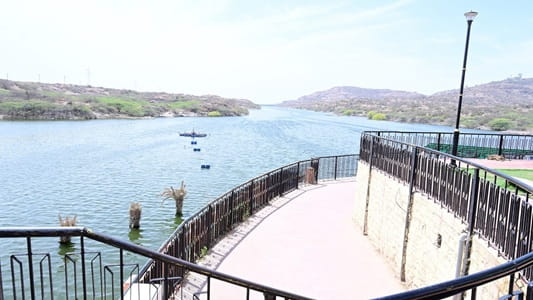
Salaulim Dam sits at Sirga, roughly 5 kilometres from Sanguem town in South Goa. It’s genuinely off the well-worn tourist trail — most visitors describe the drive itself as part of the experience, winding through dense forest, small farms, and quiet rural villages rather than Goa’s usual beach-lined highways.
From Margao, expect around an hour’s drive through scenic countryside roads, while Panaji sits a bit further at roughly 61 to 68 kilometres away. A quick tip that trips up plenty of first-time visitors — Google Maps can be inconsistent with the exact dam location, so navigating toward “Salaulim Botanical Garden” instead tends to get you there more reliably.
The River Behind the Reservoir
The dam is built across the Salaulim River, also known locally as the Guleli River, which forms part of the larger Zuari River basin. This river drains a catchment area of about 227 square kilometres, and the resulting reservoir is spread across roughly 24 square kilometres, making it Goa’s largest water body of its kind by storage capacity.
That water isn’t just for scenery. The Salaulim Irrigation Project was specifically designed to supply both irrigation water for farmland across Sanguem, Quepem, and Salcete talukas, and drinking water for a significant portion of South Goa, a role it continues to serve today alongside its growing popularity as a tourist destination.
A History Rooted in Post-Liberation Development
The idea for Salaulim Dam took shape in the early 1970s, not long after Goa’s transition out of Portuguese rule, when rising population and industrial growth created real pressure on the region’s water infrastructure. The project was formally approved in 1971 with an initial budget of around ₹9.61 crore, though by the time everything was accounted for decades later, costs had climbed substantially higher.
Construction didn’t actually begin until 1976, and it took nearly a quarter-century for the dam to be fully completed in 2000. The scale of what this project required is easy to underestimate — building the reservoir meant submerging parts or the whole of roughly 20 villages, a human cost that rarely gets mentioned in typical tourist descriptions but remains an important part of the dam’s real story.
The Duckbill Spillway That Makes This Dam Famous
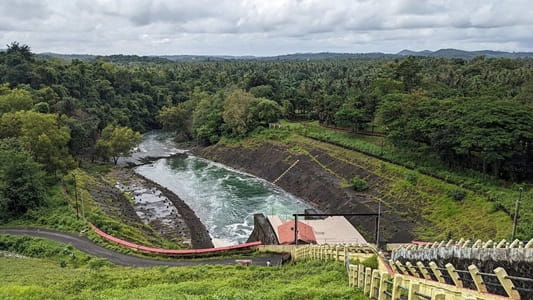
Here’s what genuinely sets Salaulim apart from most dams you’ll encounter in India. Instead of a conventional straight spillway wall, Salaulim uses a rare duckbill-shaped design, technically known as a Morning Glory spillway. Water flows through a curved, bell-shaped opening that channels the reservoir’s overflow smoothly and efficiently, rather than letting it spill over a flat edge.
During peak monsoon, when the reservoir fills to capacity, this design creates a genuinely striking visual — water cascading through the curved opening, dropping roughly 50 feet at the first level, then plunging further into a deep chasm below, creating a fine mist that hangs over the entire area. It’s this specific feature that’s made Salaulim something of a social media sensation in recent years, often described as one of Goa’s most underrated offbeat attractions.
What There Is to Do at Salaulim
Beyond watching the spillway in action, the surrounding botanical garden is worth setting aside real time for. Modelled loosely on Mysore’s Brindavan Gardens, it was developed by Goa’s Forest Department with landscaped lawns, ornamental plantings, and a genuinely peaceful atmosphere that makes it popular for family picnics.
Walking up to the top of the dam involves climbing roughly a hundred steps, and while that might sound like a minor detail, it’s worth knowing in advance if you’re travelling with elderly family members, since the site isn’t particularly accessible for senior citizens or those with mobility challenges. Most visitors spend around an hour exploring the dam and garden together, though a full day trip works well if you’re combining it with nearby attractions.
Given its location near the Western Ghats, Salaulim also makes a natural base for exploring further afield — Netravali Wildlife Sanctuary, the unusual Netravali Bubbling Lake, the centuries-old Tambdi Surla Temple, and even Dudhsagar Waterfalls are all within a reasonable driving distance.
Timings and Entry Details
Salaulim Dam is generally open daily from 9:00 AM to 6:00 PM, with no separate closure days, including public holidays. Entry fees vary somewhat depending on the source, typically ranging from around ₹10 to ₹60 for adults, with a lower fee for children, covering access to both the dam viewpoint and the botanical garden.
A canteen exists on-site, but facilities are limited, so carrying your own snacks and water is genuinely a good idea rather than relying entirely on what’s available there. Visitors should also be prepared to register their name and show a photo ID at the entrance before proceeding, and vehicles typically aren’t allowed all the way up to the dam itself unless you’re affiliated with the dam or garden staff.
Best Time to Visit and Practical Tips
Monsoon season, from June through September, is unquestionably the best window to witness the duckbill spillway at its most dramatic, when the reservoir is full and water cascades through in full force. Some sources extend the ideal window slightly further, suggesting July through November for a good balance between the overflow spectacle and pleasant weather.
Given the site’s semi-isolated location, it’s advisable to visit during daylight hours only, and note that the dam falls within a nominal security area, so a bit of general caution and adherence to posted rules is worth keeping in mind. Drone photography isn’t permitted without prior authorisation, though regular photography is welcomed and genuinely rewarding given the scenery.
Frequently Asked Questions
Q1. Why is Salaulim Dam’s spillway considered unique?
It uses a rare duckbill or Morning Glory-type design, where water flows through a curved, bell-shaped opening rather than over a straight wall. This creates a dramatic waterfall-like effect during monsoon and has made the dam a notable engineering and visual attraction.
Q2. Is Salaulim Dam suitable for elderly visitors or those with mobility issues?
Not particularly. Reaching the top viewpoint typically involves climbing around 100 steps, and the terrain isn’t wheelchair or senior-citizen friendly, so it’s worth planning accordingly if you’re travelling with family members who have mobility concerns.
Q3. What should I carry for a Salaulim Dam visit?
Comfortable walking shoes, your own snacks and water, and a valid photo ID are all recommended, since canteen facilities are limited and entry typically requires ID verification at the registration counter.
Q4. Can I combine a Salaulim Dam visit with other South Goa attractions in one trip?
Yes, easily. Netravali Wildlife Sanctuary, the Netravali Bubbling Lake, Tambdi Surla Temple, and Dudhsagar Waterfalls are all within reasonable driving distance and commonly combined into a single day’s countryside exploration from Salaulim.