Ask someone from Jharkhand’s Santhal Pargana region about a dam with an international backstory, and Massanjore comes up almost immediately. Locals still call it “Canada Dam,” and that name isn’t just a nickname — it’s a direct nod to genuine Cold War-era foreign aid that helped build this structure decades ago. Beyond the history, though, this is also where L.K. Advani was famously held after his arrest during the 1990 Rathyatra, making Massanjore a name many Indians recognise even without knowing exactly where it is. If you’re travelling through Dumka or nearby West Bengal, here’s the complete picture.

Quick Overview
| Detail | Information |
| Also Known As | Canada Dam, Pearson Dam |
| River | Mayurakshi River |
| Location | Massanjore, Raneshwar block, Dumka district, Jharkhand |
| Distance from Dumka Town | Around 25–32 km |
| Distance from West Bengal Border | About 45 km |
| Nearest Railway Station | Jasidih, roughly 63 km away |
| Nearest Airport | Ranchi, about 250 km away |
| Commissioned | 1955 (some sources cite 1956) |
| Inaugurated By | Lester B. Pearson, then Foreign Minister of Canada |
| Funded Under | The Colombo Plan, using Canadian aid |
| Dam Height | Around 155 feet from the base |
| Dam Length | About 2,170 feet |
| Reservoir Area | 16,650 acres at full capacity |
| Storage Capacity | 500,000 acre-feet |
| Spillway Gates | 21 |
| Catchment Area | Around 1,869 sq. km |
| Visiting Hours | Generally open through the day; no strict fixed hours reported |
| Entry Fee | Typically free |
| Best Time to Visit | October to March |
Where Massanjore Dam Is Located
Massanjore Dam sits in the Raneshwar block of Dumka district, roughly 25 to 32 kilometres from Dumka town, depending on the exact route. Its location right near the Jharkhand-West Bengal border means it draws visitors from both states, with towns like Rampurhat, Sainthia, and even Shantiniketan often including a Massanjore detour in their itineraries.
Getting here involves either a drive from Dumka or a longer route from West Bengal via Suri, and the journey itself is frequently described as part of the appeal, passing through mustard fields, Sal forests, and winding state highway stretches that make for a genuinely scenic drive, especially in winter when the mustard fields turn a vivid yellow.
The River Behind This International Project
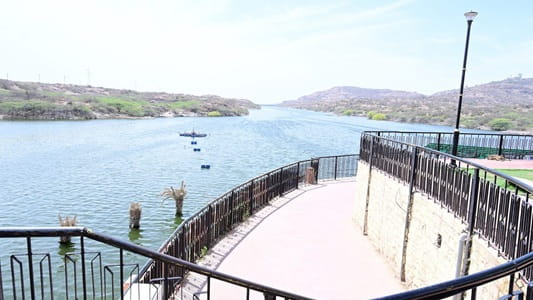
The dam is built across the Mayurakshi River, a waterway with a substantial catchment area of around 1,869 square kilometres. This positioning at the foothills of a long, forest-clad hill range is exactly why the reservoir looks the way it does — a wide expanse of water framed by hills rising on either side, creating one of the more dramatic dam landscapes in eastern India.
Water regulated here doesn’t just benefit Jharkhand. Due to a historical agreement between undivided Bihar and Bengal, a significant share of the dam’s irrigation benefits actually flow toward West Bengal, a detail that surprises many first-time visitors given the dam’s Jharkhand location.
A History Shaped by International Cooperation
Massanjore Dam’s most distinctive feature isn’t its size or engineering, but the story of how it came to be built. Constructed with financial assistance from Canada under the Colombo Plan, an international cooperation framework aimed at supporting development across South and Southeast Asia, the dam represents a genuinely unusual chapter in India’s post-independence infrastructure history.
The funding mechanism itself was creative — rupee funds generated through Canadian supplies of wheat and other materials to India were redirected specifically toward developing the Mayurakshi Dam project. The dam was formally commissioned in 1955 and inaugurated by Lester B. Pearson, then Canada’s Foreign Minister, who would later go on to become Canada’s Prime Minister and win the Nobel Peace Prize. This Canadian connection is exactly why locals still refer to it as Canada Dam or Pearson Dam even today.
There’s also a more recent, distinctly Indian political footnote to this dam’s history. The government inspection bungalow near Massanjore gained national attention in 1990 when L.K. Advani was detained here following his arrest during the famous Rathyatra, adding an unexpected layer of political history to what is otherwise primarily known as a scenic getaway.
What Massanjore Dam Does Today?
Beyond its historical significance, the dam continues serving genuinely important functional roles. Hydroelectric power generation units sit downstream of the main structure, while canal systems on either side irrigate agricultural land across the region. The dam also plays a crucial part in regulating the Mayurakshi River’s flow during monsoon, helping manage flooding risk that would otherwise affect communities downstream.
Construction of the reservoir required relocating several villages from the area, and the displaced communities resettled nearby have continued preserving their cultural traditions, with local festivals and fairs still centred around the Massanjore vicinity today.
What There Is to See and Do
The dam itself is walkable, with a road running right across its 2,170-foot length, letting visitors take in views of the reservoir on one side and a deep valley on the other simultaneously. The 21 spillway gates make for a genuinely impressive sight, particularly during monsoon when water is actively being released.
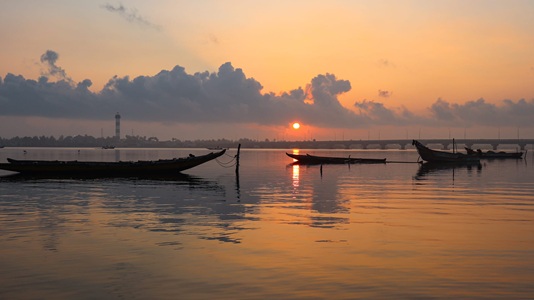
Boating on the reservoir remains a popular activity, along with fishing, birdwatching, and short hill treks for those wanting a more active visit. Sunset here is consistently mentioned as one of the best in the entire Dumka region, with the wide water body reflecting changing sky colours in a way that photographers particularly appreciate. Landscaped gardens near the base of the dam, maintained by the Irrigation Department, offer a pleasant spot for picnicking, and local vendors selling roasted corn and snacks add a simple, authentic touch to the visit.
For those wanting to stay overnight, Mayurakshi Bhawan and the Inspection Bungalow remain the most historically significant accommodation options near the dam, though a newer Massanjore Eco Tourism project has also added more developed, resort-style facilities in recent years.
Timings and Practical Details
Massanjore Dam doesn’t appear to operate under strict, formally published visiting hours, with most sources describing it as accessible throughout daylight hours. Entry is generally free, and basic facilities like restrooms, picnic areas, and small snack stalls are available on-site, though availability of specific services like boating can vary, so it’s worth checking current status if that’s a priority for your visit.
Best Time to Plan Your Visit
October through March offers the most comfortable weather for sightseeing, with cooler temperatures making both the drive and time spent around the dam genuinely pleasant. Monsoon season brings its own dramatic appeal, with the reservoir filling to capacity and the spillway gates often opened, though heavy rainfall can occasionally complicate travel to the site. New Year’s Day, interestingly, draws particularly large crowds for picnics and recreation, so if you prefer a quieter visit, it’s worth avoiding that specific date.
Frequently Asked Questions
Q1. Why is Massanjore Dam called Canada Dam?
A. It was built with financial assistance from Canada under the Colombo Plan, and its formal inauguration was performed by Lester B. Pearson, then Canada’s Foreign Minister, which is why locals continue calling it Canada Dam or Pearson Dam even decades later.
Q2. Does West Bengal benefit from a dam located in Jharkhand?
A. Yes, due to a historical water-sharing agreement dating back to when Jharkhand was part of undivided Bihar, a significant portion of the dam’s irrigation benefits flow toward West Bengal rather than staying entirely within Jharkhand.
Q3. Is there an entry fee to visit Massanjore Dam?
A. Generally no, most current sources report free entry to the dam and its surrounding areas, though specific activities like boating may carry separate charges depending on current availability.
Q4. What’s the best way to combine a Massanjore Dam visit with other nearby attractions?
A. Basukinath Temple, Deoghar’s Baidyanath Dham, and Tarapith in West Bengal are all within reasonable driving distance, making it easy to combine a Massanjore visit with a broader pilgrimage or sightseeing circuit across the Santhal Pargana and Birbhum regions.