India’s saltwater lakes are dramatically different from one another. One stretches along Odisha’s coast and mixes river water with the sea; another lies more than 4,000 metres above sea level among Ladakh’s barren mountains; another turns into a vast white salt landscape in Rajasthan. Yet all of them are often grouped under the simple label of “saltwater lakes.”
For Indian students, travellers and general-knowledge readers, one distinction is particularly useful: saline inland lakes and brackish coastal lagoons are not exactly the same thing. Chilika and Pulicat contain brackish water because freshwater mixes with seawater, while Sambhar and Pangong Tso are inland saline lakes. When the broader meaning of saltwater lakes is used, Chilika is India’s largest brackish-water lagoon, while Sambhar is India’s largest inland salt lake. Pangong Tso is much larger overall than Sambhar, but only about one-third of it lies in India, with the remainder extending into China.
Lake areas can change seasonally, so figures below are approximate.
Top 5 Largest Saltwater Lakes in India: Overview
| Rank | Lake | Location | Approx. Area | Water Type |
|---|---|---|---|---|
| 1 | Chilika Lake | Odisha | 900–1,165 km² | Brackish coastal lagoon |
| 2 | Pulicat Lake | Andhra Pradesh & Tamil Nadu | Up to ~450 km² commonly cited | Brackish lagoon |
| 3 | Pangong Tso | Ladakh & China | ~600–700 km² overall | Saline inland lake |
| 4 | Sambhar Lake | Rajasthan | ~190–230 km² | Inland saline lake |
| 5 | Tso Moriri | Ladakh | ~120 km² | High-altitude brackish/saline lake |
Note: Ranking becomes complicated because Pangong Tso is transboundary and only around one-third lies in India, while the areas of coastal lagoons vary greatly with season. The table therefore provides a practical India-focused ranking rather than pretending that every lake has a permanently fixed area.
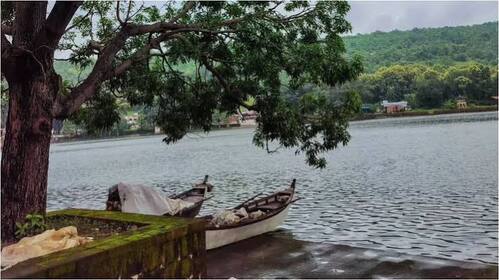
1. Chilika Lake – Odisha
- Chilika Lake is the most important name to remember when discussing India’s large brackish-water lakes.
- Located along the Odisha coast, Chilika is a huge lagoon separated from the Bay of Bengal by a narrow strip of land while remaining connected to the sea through an outlet.
- Its surface area changes considerably between seasons, generally ranging from around 900 km² in the drier period to approximately 1,165 km² during the monsoon.
- That seasonal expansion is one reason different books provide different figures for Chilika’s size.
- Freshwater enters the lagoon through numerous rivers and streams, while seawater enters through its connection with the Bay of Bengal. The result is brackish water whose salinity varies across different parts of the lagoon and at different times of year.
- Chilika is internationally famous for migratory birds. During winter, huge numbers of waterbirds arrive from distant regions.
- The lagoon is also known for its Irrawaddy dolphins, particularly around the Satapada area, making it an important destination for wildlife tourism.
- Fishing supports the livelihoods of many communities around the lagoon, giving Chilika enormous ecological as well as economic value.
2. Pulicat Lake – Andhra Pradesh and Tamil Nadu
- Pulicat is India’s other major brackish coastal lagoon.
- It lies across Andhra Pradesh and Tamil Nadu, north of Chennai. Much of the lake is separated from the Bay of Bengal by Sriharikota Island, which is also famous for hosting India’s major spaceport.
- The exact area of Pulicat varies significantly with water conditions and the boundaries used for measurement. Figures around 250–450 km² are commonly encountered, with some broader estimates being larger.
- Like Chilika, Pulicat receives freshwater from rivers and rainfall while also exchanging water with the sea. This creates a dynamic brackish ecosystem rather than a permanently uniform salt concentration.
- The lake is particularly famous for birds.
- Flamingos, pelicans, herons and numerous other waterbirds can be seen in and around the wetland, especially during favourable seasons.
- Pulicat also supports fishing communities on both sides of the Andhra Pradesh–Tamil Nadu border.
- For competitive examinations, remember the combination: Pulicat Lake – Andhra Pradesh and Tamil Nadu – brackish lagoon – Sriharikota Island.
3. Pangong Tso – Ladakh
- Few Indian lakes are as visually recognisable as Pangong Tso.
- Surrounded by stark mountains at an altitude of approximately 4,350 metres, the lake became even more famous among Indian travellers after appearing in popular films.
- But Pangong is much more than a photography destination.
- It is a long, narrow, endorheic lake, meaning its water does not naturally drain into the sea. Dissolved minerals accumulate in the basin, giving the lake its saline character.
- Pangong stretches for almost 160 kilometres. The Ladakh administration notes that approximately one-third lies in India and two-thirds in China.
- Published estimates of its total surface area vary, with figures around 600–700 km² commonly used.
- This creates an important ranking issue: Pangong’s entire lake area is larger than Sambhar’s, but most of Pangong is outside India. Sambhar, by contrast, lies completely within India.
- Another fascinating feature is that Pangong freezes during the severe Ladakh winter despite being saline.
- Its brilliant blue appearance can also change with sunlight, cloud cover and viewing angle, producing the spectacular colours for which the lake is famous.
4. Sambhar Salt Lake – Rajasthan
- If a GK question asks for the largest inland salt lake entirely within India, the answer is Sambhar Lake in Rajasthan.
- Located west of Jaipur and extending across the Jaipur, Nagaur and Ajmer region, Sambhar occupies a shallow saline depression.
- Its water spread changes dramatically with rainfall and evaporation. Government environmental documents report seasonal areas roughly in the 190–230 km² range.
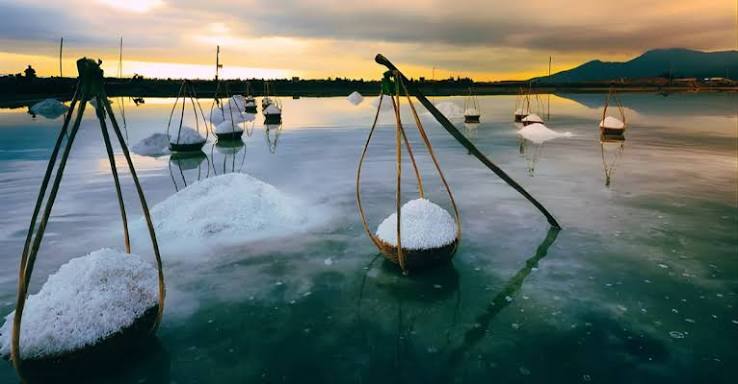
- The lake is extremely shallow. During dry periods, intense evaporation increases salt concentration and exposes extensive salt-covered surfaces.
- Salt production has therefore been closely connected with Sambhar for centuries.
- But Sambhar is not merely an industrial salt source.
- It is a Ramsar wetland of international importance and provides habitat for flamingos and many other migratory birds.
- For travellers from Delhi, Jaipur and other parts of North India, Sambhar’s vast white landscape has also become attractive for photography and birdwatching.
- Its ecology, however, is sensitive, making responsible tourism particularly important.
5. Tso Moriri – Ladakh
- Tso Moriri, also called Lake Moriri, is another spectacular high-altitude lake in Ladakh.
- It lies in the Changthang region at an elevation of more than 4,500 metres, making it one of the highest major lakes in India.
- The lake covers roughly 120 km², although exact measurements differ slightly among sources.
- Tso Moriri has no outlet to the ocean. Its closed drainage and mineral characteristics give its water a brackish-to-saline nature, although descriptions of its salinity can differ depending on scientific classification and sampling conditions.
- Unlike the heavily photographed shores of Pangong, the Tso Moriri landscape often feels more remote.
- The lake and surrounding wetland are ecologically important for high-altitude wildlife and birds. The Tso Moriri wetland is designated as a Ramsar site, underlining its international conservation significance.
- Korzok village lies near its western shore and is one of the best-known settlements associated with the lake.
Why Is Sambhar Called India’s Largest Salt Lake If Pangong Is Bigger?
- This is one of the most common sources of confusion.
- Pangong Tso is geographically larger when its entire transboundary area is considered. However, roughly two-thirds of Pangong lies in China.
- Sambhar is completely within India and is officially described by Indian authorities as the country’s largest inland salt lake.
- The terminology also differs between sources. Some use “saltwater lake” broadly enough to include brackish coastal lagoons such as Chilika, while others reserve “salt lake” for inland saline basins.
- That is why examination questions should be read carefully.
- If the question asks for India’s largest brackish-water lagoon, the answer is Chilika Lake.
- If it asks for India’s largest inland salt lake, the answer is Sambhar Lake.
Why Are Saltwater Lakes Important?
- Saltwater and brackish lakes support ecosystems that ordinary freshwater lakes cannot.
- Chilika and Pulicat provide feeding and breeding environments for fish, crustaceans and migratory birds. Their fisheries also support large numbers of local families.
- Sambhar has long been economically important for salt production while simultaneously providing valuable bird habitat.
- High-altitude lakes such as Pangong and Tso Moriri are important components of Ladakh’s fragile cold-desert environment.
- These lakes are also sensitive to changes in rainfall, freshwater inflow, pollution, tourism, salt extraction and climate conditions.
- Protecting them therefore means protecting wildlife, livelihoods and some of India’s most unusual landscapes at the same time.
FAQs
1. Which is the largest saltwater lake in India?
The answer depends on classification. Chilika is India’s largest brackish-water lagoon, while Sambhar Lake is India’s largest inland salt lake entirely within the country.
2. Is Pangong Lake freshwater or saltwater?
Pangong Tso is a saline inland lake with no natural outlet to the sea. It stretches across India and China, with approximately one-third of its length lying in India.
3. Is Chilika Lake connected to the sea?
Yes. Chilika is a coastal lagoon connected to the Bay of Bengal. Freshwater from rivers mixes with seawater, which is why Chilika is classified as brackish rather than purely saline.
4. Which is the largest salt lake in Rajasthan?
Sambhar Lake is Rajasthan’s largest salt lake and India’s largest inland salt lake. Its surface area changes considerably between wet and dry seasons.