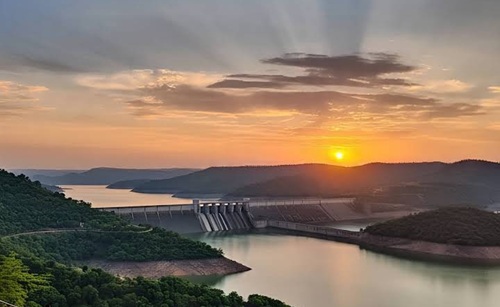
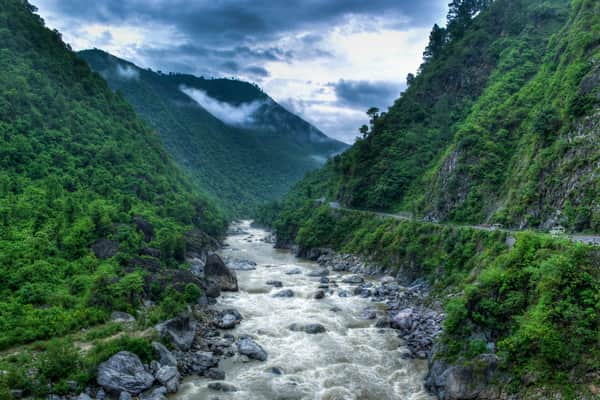
The Chenab River is one of the most important rivers of the northwestern Himalayas and a major part of the Indus river system. Flowing through spectacular mountain valleys in Himachal Pradesh and Jammu and Kashmir before entering Pakistan, the Chenab is known for its strong current, deep gorges and enormous potential for hydroelectric power generation. For communities along its course, the river is important for agriculture, water resources, electricity and local livelihoods.
Unlike rivers that begin from a single spring or glacier, the Chenab is formed by the meeting of two Himalayan rivers—the Chandra and Bhaga. These rivers originate in the high-altitude region of Himachal Pradesh and meet at Tandi in the Lahaul Valley. From their confluence, the river is known as the Chandrabhaga and, farther downstream, as the Chenab.
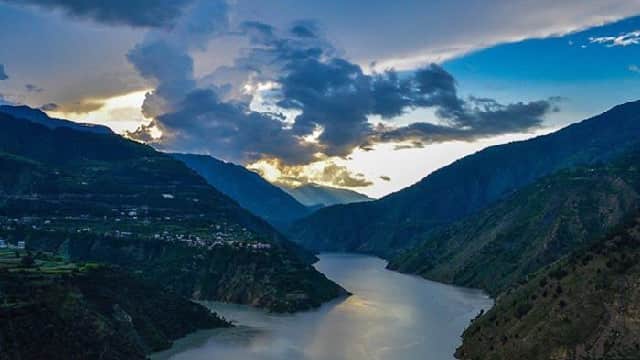
The Chenab is generally stated to be about 960 km long, although figures vary depending on whether its headstreams and different measurement methods are included. In India, its main course flows through Himachal Pradesh and the Union Territory of Jammu and Kashmir. It then enters Pakistan and eventually becomes part of the wider Indus drainage network.
Chenab River Overview
| Particular | Details |
|---|---|
| River Name | Chenab River |
| Ancient Name | Asikni |
| Upper-Course Name | Chandrabhaga |
| River System | Indus River System |
| Formed By | Chandra and Bhaga rivers |
| Confluence of Headstreams | Tandi, Himachal Pradesh |
| Approximate Length | Around 960 km |
| Indian Regions Along Main Course | Himachal Pradesh and Jammu & Kashmir |
| Countries | India and Pakistan |
| Major Tributaries | Marusudar, Tawi, Miyar Nallah and several Himalayan streams |
| Major Hydropower Projects | Salal, Baglihar, Dulhasti |
| General Flow Direction | Mainly northwest and southwest depending on section |
| Final River System | Indus |
| Treaty Classification | Western River under the Indus Waters Treaty |
Where Does the Chenab River Originate?
The Chenab does not originate from one single point. It is formed by the confluence of the Chandra and Bhaga rivers at Tandi in the Lahaul region of Himachal Pradesh.
Both headstreams originate in the high Himalayas around the Baralacha La region.
The Chandra initially flows through a cold, mountainous landscape, while the Bhaga follows a separate Himalayan valley. The two eventually meet at Tandi.
After their confluence, the combined river is traditionally called Chandrabhaga. As it travels towards Jammu and Kashmir, it becomes widely known as the Chenab.
Important facts about the Chenab’s origin:
- Formed by the Chandra and Bhaga rivers
- Headstreams originate near the Baralacha La region
- Chandra and Bhaga meet at Tandi
- Origin region lies in Himachal Pradesh
- Upper combined river is called Chandrabhaga
- Forms part of the Indus River system
What Is the Length of the Chenab River?
The Chenab River is approximately 960 kilometres long, although its stated length can vary depending on whether particular headwater sections are included.
The river begins high in the Himalayas and travels through rugged mountainous terrain before entering the comparatively lower plains of Pakistan.
Within India, the Chenab’s course is particularly important in Himachal Pradesh and Jammu and Kashmir.
The river carries water supplied by:
- Snowmelt
- Glacier melt
- Himalayan streams
- Seasonal rainfall
- Tributary rivers
These sources help maintain its flow throughout the year, although discharge varies significantly by season.
Which States Does the Chenab River Flow Through in India?
Within India, the main Chenab River is associated with:
- Himachal Pradesh
- Union Territory of Jammu and Kashmir
It is important to note that Jammu and Kashmir is currently a Union Territory, not a state.
Chenab River in Himachal Pradesh
The river system begins in the Lahaul and Spiti district of Himachal Pradesh.
The Chandra and Bhaga rivers flow through high-altitude valleys before meeting at Tandi.
From there, the Chandrabhaga travels through mountainous terrain towards the Pangi Valley and eventually leaves Himachal Pradesh.
This section is characterised by:
- Steep mountain slopes
- Narrow valleys
- Deep gorges
- Snow-fed streams
- Strong river currents
These geographical conditions provide significant potential for hydroelectric power development.
Chenab River in Jammu and Kashmir
After leaving Himachal Pradesh, the Chenab enters the Jammu region of Jammu and Kashmir.
It flows through mountainous districts including areas around Kishtwar, Doda, Ramban and Reasi.
Several major hydroelectric projects have been developed or planned along this section because of the river’s strong flow and steep gradient.
The Chenab then continues towards the international border and enters Pakistan.
Course of the Chenab River
The Chenab’s journey can broadly be divided into three sections.
Upper Himalayan Course
The Chandra and Bhaga originate in the high Himalayas of Himachal Pradesh.
After meeting at Tandi, the river flows as the Chandrabhaga through the Lahaul and Pangi regions.
The upper course is characterised by steep gradients and rocky valleys.
Middle Course in Jammu and Kashmir
After entering Jammu and Kashmir, the river flows through deep gorges and mountainous terrain.
Major towns and districts in this region depend on the Chenab system for hydropower, agriculture and local water needs.
Several tributaries join the river during this stage.
Lower Course in Pakistan
The Chenab eventually enters Pakistan, where it reaches the Punjab plains.
It receives additional rivers and ultimately joins the Sutlej through the Panjnad system. The combined waters then enter the Indus River.
The overall drainage sequence can therefore be understood as:
Chenab → Panjnad → Indus → Arabian Sea
Major Tributaries of the Chenab River
The Chenab receives numerous tributaries and mountain streams during its journey.
1. Marusudar River
The Marusudar is one of the most important tributaries of the Chenab in Jammu and Kashmir.
It flows through the Kishtwar region and drains a large mountainous catchment before joining the Chenab.
The river system is also important for hydroelectric power development.
2. Tawi River
The Tawi River originates in the Himalayan region of Jammu and Kashmir and flows through Jammu city.
It later joins the Chenab system in Pakistan.
The Tawi is culturally and geographically important to the Jammu region.
3. Miyar Nallah
The Miyar Nallah drains the Miyar Valley in Himachal Pradesh and contributes water to the Chenab system.
Its catchment includes glaciers and high-altitude Himalayan terrain.
Other Mountain Tributaries
Numerous smaller rivers and streams feed the Chenab throughout its Himalayan course.
Its tributary network receives water from:
- Glaciers
- Seasonal snow
- Mountain springs
- Monsoon rainfall
- High-altitude streams
Major Hydroelectric Projects on the Chenab River
The Chenab has enormous hydropower potential because of its steep Himalayan gradient and strong flow.
Several major projects have been constructed along the river in Jammu and Kashmir.
Salal Hydroelectric Project
The Salal Project is located in the Reasi region and is one of the established hydropower projects on the Chenab.
It contributes electricity to the northern power grid.
Baglihar Hydroelectric Project
The Baglihar Dam is located on the Chenab in the Ramban region.
It is an important run-of-the-river hydroelectric project designed to use the river’s natural flow and elevation difference for electricity generation.
Dulhasti Hydroelectric Project
The Dulhasti Project is situated in the Kishtwar region.
It is another major hydropower installation utilising the Chenab’s mountainous course.
Other projects in the Chenab basin include major developments such as Ratle and Pakal Dul, reflecting the river’s considerable energy potential.
Chenab River and the Indus Waters Treaty
The Chenab is one of the six major rivers covered by the Indus Waters Treaty of 1960 between India and Pakistan.
Under the treaty framework, the rivers are broadly divided into Eastern and Western Rivers.
Eastern Rivers:
- Ravi
- Beas
- Sutlej
Western Rivers:
- Indus
- Jhelum
- Chenab
The Chenab is therefore classified as a Western River.
India has specified rights regarding uses such as domestic consumption, agriculture and hydroelectric power within the framework of the treaty. This makes the Chenab important not only geographically but also in terms of international water management.
Agricultural and Economic Importance
Although the upper Chenab flows largely through mountainous terrain, the river is important for agriculture and the broader economy.
Its benefits include:
- Hydroelectricity: Strong currents and steep gradients support major power projects.
- Irrigation: River water supports agricultural areas, especially farther downstream.
- Water resources: Mountain communities depend on its river system.
- Employment: Hydropower and infrastructure projects generate economic activity.
- Tourism: Scenic valleys along the river attract travellers and adventure enthusiasts.
- Biodiversity: The river and surrounding valleys support Himalayan ecosystems.
Cultural Importance of the Chenab
The Chenab also occupies an important place in the cultural traditions of the Punjab region.
It is famously associated with the legendary love story of Heer and Ranjha and appears in Punjabi folklore, poetry and traditional songs.
Its ancient Sanskrit name, Asikni, also demonstrates the river’s long historical importance.
Alongside the Jhelum, Ravi, Beas and Sutlej, the Chenab forms part of the river system that historically shaped the geography and identity of the wider Punjab region.
Why Is the Chenab River Important?
The Chenab has geographical, economic and strategic importance for India.
Key reasons include:
- It is a major river of the Indus system.
- It has enormous hydroelectric power potential.
- It provides water to Himalayan communities.
- Its tributaries drain large mountainous regions.
- It is covered by the Indus Waters Treaty.
- It supports agriculture and water management downstream.
- Its valleys have significant tourism potential.
- It has deep historical and cultural importance.
FAQs About the Chenab River
1. Where does the Chenab River originate?
A. The Chenab is formed by the confluence of the Chandra and Bhaga rivers at Tandi in Himachal Pradesh. Both headstreams originate in the high Himalayan region around Baralacha La. The combined river is initially known as Chandrabhaga.
2. Which Indian states does the Chenab River flow through?
A. In India, the Chenab flows through Himachal Pradesh and the Union Territory of Jammu and Kashmir. It later enters Pakistan and continues through the Punjab region.
3. Is the Chenab a tributary of the Indus River?
A. Yes. The Chenab belongs to the Indus river system. In Pakistan, its waters ultimately become part of the Panjnad system, which joins the Indus River before reaching the Arabian Sea.
4. Which are the major dams on the Chenab River?
A. Important hydroelectric projects on the Chenab include the Salal, Baglihar and Dulhasti projects. Additional hydropower developments in the wider Chenab basin make it one of India’s most important Himalayan rivers for electricity generation.