When planning a wardrobe, modular kitchen, TV unit or study table, most Indian homeowners spend plenty of time choosing colours, laminates and handles. But the material hidden underneath those finishes can have a much bigger impact on how the furniture performs. Two names you will frequently hear from carpenters and interior designers are plywood and MDF.
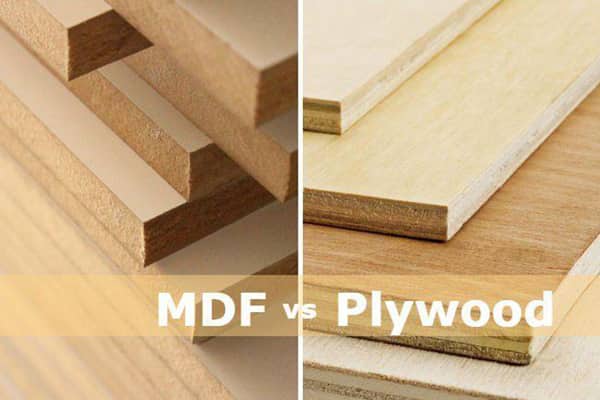
Although both are engineered wood products, they are manufactured differently and have distinct strengths. Plywood is made by bonding multiple thin layers of wood veneer, while MDF is produced from fine wood fibres compressed with binders into smooth, dense boards. Plywood is generally preferred where structural strength, screw holding and resistance to demanding use are important. MDF is valued for its exceptionally smooth surface and ability to create painted, routed and decorative designs.
Neither material is automatically better for every piece of furniture. The right choice depends on where it will be installed, how much load it must carry, moisture exposure, desired finish and your budget.
Plywood Vs MDF: Quick Comparison
| Factor | Plywood | MDF |
|---|---|---|
| Construction | Multiple layers of wood veneer | Compressed wood fibres and binders |
| Strength | Generally higher structurally | Suitable for many applications but generally lower structural strength |
| Screw Holding | Usually good, especially through face | Generally lower, especially at edges |
| Moisture Performance | Depends on plywood grade | Standard MDF is moisture-sensitive |
| Surface | May show grain/veneer texture | Very smooth and uniform |
| Painted Finish | Good with preparation | Excellent for smooth painted finishes |
| Decorative Routing | Possible | Particularly suitable |
| Weight | Varies by species and construction | Often relatively dense and heavy |
| Edge Appearance | Layered edges | Smooth but porous edges |
| Repairability | Generally better | More limited after major damage |
| Common Uses | Kitchens, wardrobes, beds, cabinets | Panels, shutters, decorative furniture |
| Price | Depends heavily on grade | Often economical depending on type |
What Is Plywood?
Plywood is manufactured by bonding thin sheets of wood known as veneers.
These layers are generally arranged so that the grain direction of adjacent layers runs differently. This cross-layered construction improves dimensional stability and gives plywood useful structural strength.
The number, thickness and quality of layers can vary.
Plywood used in Indian furniture is available in different grades and specifications for different environments. Therefore, simply asking a carpenter to use “plywood” is not enough.
You should understand:
- Plywood grade
- Thickness
- Intended application
- Manufacturer
- Quality certification where relevant
- Adhesive/bonding characteristics
A board suitable for a dry bedroom wardrobe may not necessarily be the correct choice for a moisture-prone kitchen area.
What Is MDF?
MDF stands for Medium-Density Fibreboard.
Instead of using layers of natural veneer, MDF is manufactured using fine wood fibres combined with suitable binders and compressed under controlled conditions.
The result is a dense, consistent panel without the natural grain structure found in plywood.
This uniformity is one of MDF’s major advantages.
Because the surface is extremely smooth, MDF works well for:
- Painted furniture
- Decorative wall panels
- Routed cabinet shutters
- CNC-cut designs
- Mouldings
- TV-unit panels
- Interior decorative elements
It can create detailed designs that may be more difficult or expensive to achieve using some other materials.
Plywood Is Generally Stronger
For furniture that needs structural strength, plywood is commonly preferred.
Its layered construction distributes loads across multiple veneers and grain directions.
This makes suitable plywood useful for:
- Bed structures
- Wardrobe carcasses
- Kitchen cabinets
- Storage units
- Shelves
- Tables
- Heavy-use furniture
However, strength varies by plywood quality and thickness.
A thin or poorly manufactured sheet should not be expected to perform like high-quality plywood of appropriate thickness.
Furniture design also matters. Even good plywood can bend if a long shelf carries excessive weight without adequate support.
MDF Provides an Exceptionally Smooth Surface
MDF’s major strength is surface quality.
Because it is manufactured from fine fibres, it has no natural knots or prominent grain.
This makes it an excellent substrate for smooth painted finishes.
For example, if you want wardrobe shutters with:
- Matte painted finish
- High-gloss painted finish
- Routed grooves
- Decorative patterns
- Traditional-style panel detailing
MDF can be particularly useful.
Designers often choose MDF when visual consistency and detailed machining are more important than maximum structural strength.
Which Holds Screws Better?
Plywood generally provides better screw-holding performance than standard MDF, especially in applications where hardware will experience repeated movement.
This can be important for:
- Hinges
- Drawer channels
- Cabinet fittings
- Bed hardware
- Frequently opened shutters
MDF can hold suitable screws when correctly designed and installed, but its fibre-based structure can be more vulnerable to damage if screws are overtightened or repeatedly removed and reinserted.
Edges require particular care.
Correct pilot holes, appropriate fasteners and professional installation can improve performance in both materials.
Moisture Resistance Is an Important Difference
Moisture is a major concern in Indian homes, especially in kitchens, bathrooms, utility areas and humid regions.
Standard MDF can absorb moisture if water penetrates an unprotected surface or edge. This can lead to swelling and deterioration.
Moisture-resistant MDF products are available, but moisture-resistant should not automatically be interpreted as waterproof.
Plywood also varies significantly.
Certain plywood grades are specifically designed to offer greater resistance to moisture and water exposure than general interior-grade products.
Regardless of material, good furniture should avoid continuous water exposure.
Important protective measures include:
- Proper edge sealing
- Correct surface finish
- Repairing plumbing leaks quickly
- Keeping furniture away from standing water
- Choosing the correct material grade for the location
Which Is Better for Modular Kitchens?
For structural kitchen cabinetry, quality plywood of a suitable grade is commonly preferred because kitchens experience moisture, heat, hardware movement and frequent use.
Plywood can be particularly useful for:
- Cabinet carcasses
- Sink-unit structures
- Heavily loaded drawers
- Shelving
MDF can still have a role in kitchen design, particularly for decorative shutters or painted components when an appropriate grade and finish are used.
Instead of making the entire kitchen from one material, designers may combine materials according to function.
For example:
- Suitable plywood for structural cabinets
- MDF for selected decorative shutters
- Laminate, veneer or paint for visible finishes
Material selection should be based on each component’s exposure and load.
Which Is Better for Wardrobes?
Both materials can be used effectively in wardrobes.
Plywood is often preferred for the main wardrobe structure because of its strength and ability to hold hardware.
MDF can be useful for decorative doors and panels.
For a wardrobe, consider:
- Overall height
- Shelf span
- Clothing load
- Drawer construction
- Hinge quantity
- Door weight
- Room humidity
- Wall dampness
If a bedroom wall has a moisture or seepage problem, fixing the wall should be the first priority. No furniture board should be expected to compensate permanently for building dampness.
MDF Is Excellent for Decorative Designs
MDF is highly popular with CNC machines and routing tools because of its consistent internal structure.
Designers can create:
- Fluted panels
- Geometric patterns
- Grooved shutters
- Decorative wall features
- Traditional-style profiles
- Custom mouldings
Plywood can also be machined, but its layered construction may become visible at routed edges.
Therefore, MDF often has an advantage when the design requires extensive surface carving or profiling followed by paint.
Plywood Is Usually Easier to Repair
Furniture experiences wear over time.
A hinge may become loose, a corner may be damaged or a panel may need modification.
Quality plywood often offers more flexibility for repairs because of its layered wood structure and screw-holding capability.
MDF can be more difficult to restore after severe moisture swelling, broken edges or significant screw-hole damage.
If MDF has absorbed enough water to expand noticeably, simply drying it may not return it to its original dimensions.
Replacement of the affected component may sometimes be more practical.
What About Termites?
Neither plywood nor MDF should automatically be considered completely termite-proof.
Performance depends on:
- Product composition
- Treatments used
- Manufacturing quality
- Environmental conditions
- Moisture
- Existing termite infestation
If termites are already present in the building, they can attack multiple wood-based materials.
Proper building-level termite management is therefore more important than relying only on the furniture-board label.
Cost: Which Is Cheaper?
MDF is often more affordable than high-quality plywood, but prices vary considerably according to thickness, grade, brand and special properties.
Do not compare only the price per sheet.
Consider the total installed cost, including:
- Board
- Laminate or paint
- Edge finishing
- Hardware
- Labour
- Maintenance
- Expected lifespan
A cheaper board that needs premature replacement may ultimately cost more.
Likewise, paying for premium plywood everywhere may be unnecessary if a lower-cost material performs perfectly well in a decorative, dry, low-load application.
Plywood Vs MDF: Which Should You Choose?
Choose plywood when:
- Structural strength is important.
- Furniture carries substantial loads.
- Hinges and hardware receive frequent use.
- The application has greater moisture risk and an appropriate plywood grade is available.
- Long-term durability is a priority.
Choose MDF when:
- You want a smooth painted surface.
- Decorative routing is required.
- The component is mainly aesthetic.
- The location is relatively dry.
- Budget efficiency is important.
In many well-designed interiors, the best answer is not plywood or MDF. It is using each material where its characteristics provide the greatest benefit.
A wardrobe, for example, can have a plywood carcass combined with beautifully routed MDF shutters.
The most important step is to ask exactly what material and grade are being used in each part of the furniture instead of accepting a vague description such as “premium engineered wood.”
FAQs
1. Is MDF suitable for a kitchen?
A. MDF can be used for selected kitchen components, particularly decorative shutters, when an appropriate grade and protective finish are used. For areas with greater water exposure or heavy structural demands, suitable plywood is often preferred.
2. Does MDF swell when exposed to water?
A. Standard MDF can swell when it absorbs significant moisture, particularly through unsealed edges. Moisture-resistant variants offer improved performance but should still be protected from prolonged water exposure.
3. Which is better for wardrobe shutters—plywood or MDF?
A. Both can work. Plywood provides strength and good hardware holding, while MDF is excellent for smooth painted or routed shutters. Large or heavy shutters require correct thickness, hinges and construction regardless of material.
4. Can plywood and MDF be used together in the same furniture?
A. Yes. Combining materials is common. A designer might use plywood for the structural carcass and MDF for decorative painted panels or shutters, allowing each material to perform the role for which it is best suited.