Buying life insurance is not simply about choosing the policy with the longest coverage or the lowest premium. The real purpose is to ensure that your family’s important financial needs can still be met if you are no longer there to provide income. For an Indian household, these needs may include a home loan, children’s education, everyday expenses, dependent parents and other long-term commitments.
Two options that people commonly compare are term insurance and whole life insurance. Term insurance primarily provides life cover for a selected period and generally offers a relatively large sum assured for a lower premium. Whole life insurance is designed to provide coverage for a very long period—often up to a specified advanced age under the policy—and may include savings or cash-value-related features depending on the product.
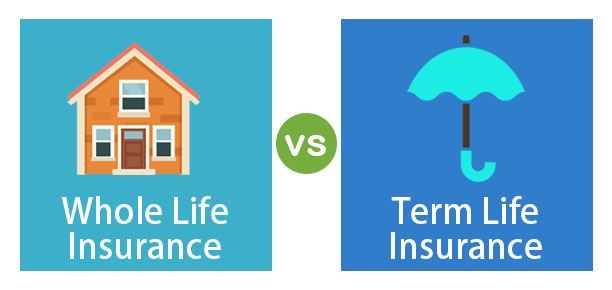
The better option therefore depends on what you actually want from insurance. If your main priority is affordable financial protection for dependants, term insurance often deserves serious consideration. If you have specific lifelong protection or estate-planning requirements, certain whole life products may be relevant.
Term Insurance Vs Whole Life Insurance: Quick Comparison
| Factor | Term Insurance | Whole Life Insurance |
|---|---|---|
| Primary Purpose | Life protection | Long-duration life protection, often with savings features |
| Coverage Period | Selected policy term | Usually extends to a specified advanced age |
| Premium | Generally lower | Generally higher |
| Sum Assured Affordability | Usually higher for the same premium budget | Usually lower for the same premium budget |
| Maturity Benefit | Usually none in pure term plans | Depends on policy structure |
| Cash/Savings Value | Generally none in pure term plans | May build value depending on product |
| Complexity | Relatively simple | Usually more complex |
| Suitable For | Income replacement and major liabilities | Specific lifelong protection/legacy needs |
| Investment Component | Normally absent in pure term insurance | May be present |
| Financial Commitment | Lower for comparable cover | Usually higher |
What Is Term Insurance?
Term insurance is one of the simplest forms of life insurance.
You select a sum assured and a policy term. If the insured person dies during the policy period and the claim meets the policy conditions, the insurer pays the applicable death benefit to the nominee or beneficiary.
For example, someone may purchase substantial life cover until age 60 or 65 to protect the years during which their family depends heavily on their income.
Pure term plans generally do not provide a maturity payment if the insured survives the policy term.
That may initially sound like a disadvantage, but it is also one reason term insurance can provide a large amount of protection at a comparatively affordable premium.
What Is Whole Life Insurance?
Whole life insurance is designed to provide life cover for a much longer duration, generally extending to an advanced age specified in the policy rather than a conventional 20- or 30-year term.
Depending on the product, it may combine insurance protection with features such as:
- Savings or cash value
- Bonuses in participating policies
- Maturity benefits at a specified advanced age
- Limited premium payment options
- Legacy-oriented benefits
The exact structure differs significantly between insurers and policies.
Therefore, buyers should not assume that every product described as whole life insurance provides identical benefits.
Term Insurance Is Primarily About Protection
The strongest feature of term insurance is its focus on financial protection.
Imagine a 32-year-old earning member with a spouse, young child and housing loan. If that person’s income suddenly disappears, the family could face decades of financial responsibilities.
A sufficiently sized term policy can help provide funds for:
- Household expenses
- Outstanding loans
- Children’s education
- Dependants’ long-term needs
- Major future financial goals
Because pure term insurance does not generally allocate part of the premium towards savings or maturity value, it can provide substantial coverage without requiring the premium associated with many savings-linked life insurance products.
Whole Life Insurance Extends Coverage Much Longer
Term insurance is usually selected for a defined period.
Whole life insurance is designed for substantially longer protection.
This can matter when the objective is not simply replacing employment income.
For example, someone may want insurance for:
- Leaving money to heirs
- Supporting a financially dependent family member
- Creating liquidity for an estate
- Long-term legacy planning
- Certain succession-related objectives
However, these requirements should be evaluated carefully.
Most families’ largest life-insurance need exists during their working years when children, loans and household expenses depend on earned income.
Once debts decline, investments grow and children become financially independent, the amount of life cover required may change.
Premiums Are a Major Difference
Suppose two policies provide a similar initial sum assured.
The whole life policy will generally require a higher premium than pure term insurance because of the longer coverage period and, where applicable, savings-related benefits.
This matters because life insurance should be affordable enough to maintain for the intended duration.
Buying an expensive policy and later discontinuing it due to financial pressure can undermine the original plan.
When comparing premiums, consider:
- Sum assured
- Coverage period
- Premium-payment period
- Guaranteed benefits
- Non-guaranteed benefits
- Riders
- Exclusions
- Surrender conditions
Do not compare policies using premium alone.
Does Term Insurance Waste Money If You Survive?
This is a common concern.
People sometimes feel that paying premiums without receiving money back at maturity means the premiums were wasted.
But insurance is primarily a risk-management tool.
You do not buy life cover because you expect to die during the policy term. You buy it because the financial consequences for your dependants could be severe if that happens.
The value of pure term insurance is the financial risk transferred to the insurer, not a guaranteed maturity payout.
Some insurers offer return-of-premium variants, but these typically cost more than comparable pure term plans. Compare the additional cost carefully before choosing such a feature.
Whole Life Insurance May Include a Savings Element
Certain whole life policies can accumulate value or provide benefits beyond the basic death cover.
This appeals to people who prefer combining protection with long-term savings.
However, insurance and investment objectives should still be evaluated separately.
Ask:
- How much of my financial requirement is actually life cover?
- What benefits are guaranteed?
- Which benefits depend on future bonuses or assumptions?
- What happens if I stop paying?
- What is the surrender value?
- What is the effective long-term return?
- Could protection and investment be handled separately?
A policy illustration can help, but buyers should distinguish clearly between guaranteed and non-guaranteed figures.
Which Gives You More Life Cover for Your Budget?
For people primarily seeking a large death benefit, term insurance generally has an important advantage.
Consider a young parent who needs substantial protection because the family has a home loan and many years of future expenses.
With a limited annual budget, purchasing adequate whole life cover could be significantly more expensive.
A term plan may allow that person to obtain the required protection while keeping money available for other priorities such as:
- Emergency fund
- Health insurance
- Retirement investments
- Children’s education
- Debt repayment
The objective should be adequate protection rather than simply owning a policy.
How Much Life Insurance Do You Actually Need?
There is no single amount suitable for every person.
Instead of relying only on a simple multiple of annual income, calculate the family’s actual financial requirement.
Consider:
- Outstanding home and other significant loans
- Annual household expenditure
- Number and age of dependants
- Children’s education requirements
- Existing savings and investments
- Existing life insurance
- Spouse’s income
- Future major obligations
- Number of years income needs replacement
For example, a person with young children and a large home loan may require much more cover than someone of the same age with no dependants and substantial assets.
Review your insurance needs after major life events such as marriage, childbirth or taking a significant loan.
Who Should Consider Term Insurance?
Term insurance can be particularly useful for:
- Salaried professionals
- Business owners
- Parents with dependent children
- People with home or other major loans
- Primary earning members
- Young professionals planning a family
It is especially relevant when the main objective is to obtain substantial financial protection at a manageable cost.
Buying earlier may also help because age and health are among the factors insurers use when determining premiums.
Who Might Consider Whole Life Insurance?
Whole life insurance may be considered by people with specific long-duration financial planning requirements.
It may be relevant when:
- Lifelong or very long-duration cover is genuinely required.
- Legacy planning is an important objective.
- There is a long-term dependent requiring financial support.
- The buyer understands the savings component and associated costs.
- Premiums remain comfortably affordable.
It should not automatically be chosen simply because it lasts longer.
Longer coverage has value only when it serves a genuine financial objective.
Term Insurance Vs Whole Life Insurance: Which Is Better?
For many working Indian families whose primary goal is income replacement and financial protection, pure term insurance can be a practical option because it generally allows substantial coverage at a comparatively affordable premium.
Whole life insurance may suit narrower situations involving long-term protection, legacy planning or a preference for particular savings-linked insurance features.
Before buying either policy:
- Calculate your actual life-cover requirement.
- Compare benefits rather than premiums alone.
- Understand exclusions and claim conditions.
- Disclose health and lifestyle information accurately.
- Check premium-payment obligations.
- Read the policy wording carefully.
- Nominate the appropriate person and keep family informed.
- Review your cover periodically.
The right policy is not necessarily the one promising the largest maturity amount or the longest coverage. It is the one that provides the protection your family genuinely needs while remaining affordable and aligned with your overall financial plan.
FAQs
1. Is term insurance suitable if I already have life insurance through my employer?
A. Employer-provided life insurance may be useful, but the coverage may be insufficient and could end when you change or leave your job. Calculate your family’s total requirement and consider whether independent personal cover is necessary.
2. What happens if I survive my term insurance policy?
A. In a pure term plan, coverage generally ends when the selected policy term finishes, and no maturity benefit is normally payable. Return-of-premium products work differently and should be evaluated according to their specific terms and additional cost.
3. Can I buy term insurance and whole life insurance together?
A. Yes, subject to insurer underwriting and eligibility. Some people may use term insurance for major income-replacement needs and another policy for a specific long-term objective. Each policy should serve a clear purpose rather than creating unnecessary premium commitments.
4. Should I choose life insurance mainly for tax saving?
A. Tax benefits should generally be secondary to the purpose of insurance. Tax treatment depends on prevailing laws and policy conditions and can change. First ensure that the policy provides adequate protection and fits your financial needs.