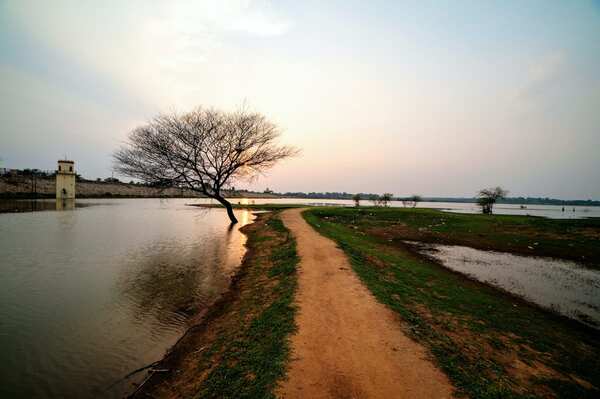
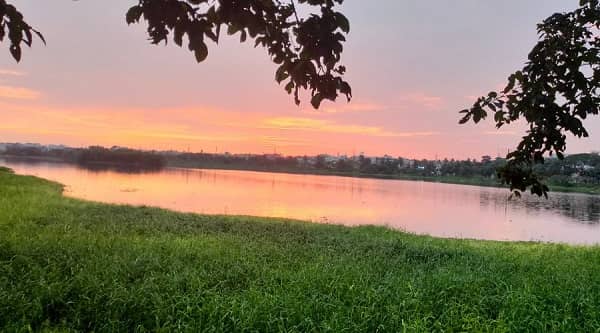
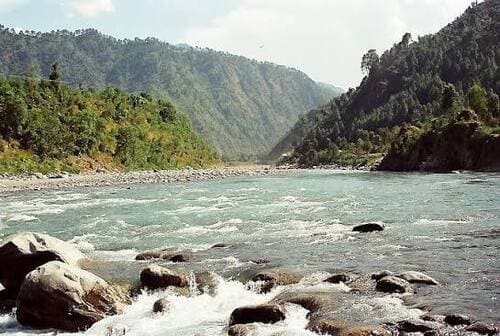
The Ravi River is one of the five historic rivers that give Punjab its name and an important part of the Indus River system. Rising in the Himalayan region of Himachal Pradesh, the river flows through spectacular mountain valleys before reaching the plains near Punjab and continuing towards Pakistan. For centuries, the Ravi has influenced agriculture, settlements, irrigation and the cultural geography of northwestern India.
The river is particularly important for Himachal Pradesh, Jammu and Kashmir and Punjab. Major water projects such as the Chamera dams and Ranjit Sagar Dam use its waters for hydroelectric power, irrigation and other purposes. After leaving India, the Ravi continues into Pakistan and ultimately joins the Chenab River.
With a total length of roughly 720–725 km, the Ravi is smaller than some other major rivers of the Indus system but has considerable geographical and economic importance. Understanding its origin, course, tributaries and flowing regions also helps explain the larger river network of Punjab and the northwestern Himalayas.
Ravi River Overview
| Particular | Details |
|---|---|
| River Name | Ravi River |
| Ancient Name | Iravati / Parushni |
| River System | Indus River System |
| Origin | Himalayan region of Himachal Pradesh |
| Origin Area | Bara Bhangal region, Kangra district |
| Approximate Length | About 720–725 km |
| Indian Regions Associated with Main Course | Himachal Pradesh, Jammu and Kashmir, Punjab |
| Major Tributaries | Budhil, Siul, Baira, Ujh and other mountain streams |
| Important City | Chamba |
| Major Dam | Ranjit Sagar Dam |
| Important Hydropower Projects | Chamera projects |
| Final Confluence | Chenab River in Pakistan |
Where Does the Ravi River Originate?
The Ravi River originates in the Himalayan region of Himachal Pradesh, in the vicinity of the Bara Bhangal area of Kangra district. Its headwaters develop in the high-altitude Himalayan terrain, where snowmelt, mountain streams and seasonal precipitation feed the young river.
The upper Ravi flows through steep valleys surrounded by mountains before reaching the Chamba region. This mountainous setting gives the river a relatively fast flow in its upper course.
The Ravi has been known by different names historically. The ancient Sanskrit name Iravati is widely associated with the river, while Parushni is another ancient name linked to it.
Important points about the Ravi’s origin:
- It originates in the Himalayas of Himachal Pradesh.
- Its headwaters are associated with the Bara Bhangal region.
- Snowmelt and mountain streams contribute to its flow.
- The river passes through the famous Chamba Valley.
- It forms part of the larger Indus drainage system.
What Is the Length of the Ravi River?
The total length of the Ravi River is generally estimated at around 720 to 725 kilometres.
Only part of this distance lies within India because the river eventually enters Pakistan and continues its journey there.
The exact length may differ slightly across geographical references because river lengths can vary depending on the headwater selected as the source and the method used to map bends in the river channel.
Despite its comparatively modest length, the Ravi drains an important area of the western Himalayan region and the Punjab plains.
Which States Does the Ravi River Flow Through in India?
Within India, the Ravi River is primarily associated with Himachal Pradesh, Jammu and Kashmir, and Punjab.
Its relationship with each region differs because much of the upper river flows through Himachal Pradesh, while portions of its lower course form or run close to regional and international boundaries.
Himachal Pradesh
The Ravi begins in Himachal Pradesh and has a major portion of its upper course within the state.
It flows through the scenic Chamba Valley, where numerous mountain streams and tributaries add water to the main river.
Chamba town is one of the best-known settlements located along the Ravi.
The mountainous terrain also provides favourable conditions for hydroelectric power generation. Several projects in the Chamera series have been developed along the Ravi in this region.
Jammu and Kashmir
Further downstream, the Ravi system is associated with the southern part of the Union Territory of Jammu and Kashmir, particularly around the Kathua region.
The Ujh River, an important tributary of the Ravi, flows through this area.
Punjab
The Ravi reaches the Punjab plains after leaving the Himalayan region. Sections of the river are associated with the boundary between Punjab and Jammu and Kashmir, while downstream stretches are closely connected with the India-Pakistan border.
The river then continues into Pakistan.
Therefore, for present-day administrative geography, the Indian course and basin of the Ravi are mainly associated with:
- Himachal Pradesh
- Jammu and Kashmir
- Punjab
Course of the Ravi River from the Himalayas to Pakistan
The Ravi’s journey begins in the rugged Himalayan landscape of Himachal Pradesh.
Upper Course
- In its upper reaches, the river moves through steep mountains and narrow valleys. Snowmelt, rainfall and smaller streams feed the river.
- The Ravi then passes through the Chamba Valley, one of the most important geographical regions along its Indian course.
Middle Course
- As it continues downstream, the Ravi receives additional tributaries and passes through areas where major hydroelectric projects have been constructed.
- The Chamera hydroelectric projects are prominent examples of how the river’s elevation difference and flow are utilised for power generation.
Lower Course
- The Ravi then approaches the plains near Punjab and the Jammu region. The Ranjit Sagar Dam, also known as the Thein Dam, is a major multipurpose project constructed across the river.
- Further downstream, the river moves towards the international border and enters Pakistan.
- It ultimately joins the Chenab River, which later becomes part of the larger Indus drainage network.
Major Tributaries of the Ravi River
Numerous streams and tributaries originating in the Himalayas contribute to the Ravi. Their flow is influenced by snowfall, snowmelt and monsoon rainfall.
Some important tributaries include:
1. Budhil River
- The Budhil River is an important tributary of the Ravi in Himachal Pradesh.
- It originates in the high mountainous region and drains part of the Chamba area before contributing its water to the Ravi.
2. Siul River
- The Siul River is another significant tributary of the Ravi system in Himachal Pradesh.
- It drains parts of the mountainous Chamba region and ultimately joins the Ravi.
3. Baira River
- The Baira River forms part of the upper Ravi drainage system. Like many Himalayan tributaries, it flows through steep terrain before joining the larger river network.
- The river is also associated with hydroelectric development.
4. Ujh River
- The Ujh River is one of the important tributaries of the Ravi in the Jammu region.
- It originates in the hills and flows through the Kathua area before eventually contributing to the Ravi system.
Important tributaries of the Ravi include:
- Budhil
- Siul
- Baira
- Ujh
In addition, numerous smaller Himalayan streams feed the Ravi throughout its upper catchment.
Important Dams and Hydroelectric Projects on the Ravi
The Ravi is particularly important for hydroelectric power generation because of the steep terrain through which its upper course travels.
Ranjit Sagar Dam
The Ranjit Sagar Dam, also known as the Thein Dam, is one of the largest and most important projects constructed across the Ravi River.
It is located near the Punjab-Jammu and Kashmir region and creates a large reservoir.
Its major functions include:
- Hydroelectric power generation
- Irrigation support
- Water storage
- Regulation of river water
Chamera Hydroelectric Projects
The Chamera hydroelectric projects are situated on the Ravi in Himachal Pradesh.
These projects use the natural gradient and river flow of the mountainous Chamba region to generate electricity.
Hydropower development makes the Ravi economically important well beyond the agricultural areas of the Punjab plains.
Importance of the Ravi River for Agriculture
Like other rivers of the Punjab region, the Ravi has historically played an important role in agriculture and irrigation.
The river system supports water-management infrastructure that helps supply agricultural land.
Water from the broader Ravi system is useful for crops such as:
- Wheat
- Paddy
- Sugarcane
- Maize
- Vegetables
- Pulses
- Other seasonal crops
The construction of dams, barrages and canals has made it possible to regulate and distribute river water more effectively.
Ravi River and the Indus Waters Treaty
The Ravi is also important in the context of water sharing between India and Pakistan.
Under the Indus Waters Treaty of 1960, the six major rivers of the Indus system were broadly divided into eastern and western rivers for water-use purposes.
The Ravi, along with the Beas and Sutlej, is classified as an Eastern River under the treaty.
The three Western Rivers are:
- Indus
- Jhelum
- Chenab
This classification makes the Ravi strategically important in India’s water-resource planning, irrigation and river-development projects.
Why Is the Ravi River Important?
The importance of the Ravi extends across geography, agriculture, energy, history and international water management.
Some of its major roles include:
- Indus tributary: It forms an important part of the Indus River system.
- Hydropower generation: Mountainous sections support major hydroelectric projects.
- Irrigation: River water contributes to agricultural activity.
- Water storage: Large dams help store and regulate water.
- Regional development: River projects support communities and economic activity.
- Historical importance: The Ravi is one of the five historic rivers associated with Punjab.
- International significance: It is one of the Eastern Rivers covered by the Indus Waters Treaty.
Ravi River’s Connection with Punjab
The name Punjab is traditionally understood as the “land of five rivers.” The Ravi is one of the historic rivers associated with this identity.
The five rivers traditionally linked with Punjab are:
- Jhelum
- Chenab
- Ravi
- Beas
- Sutlej
These rivers and their tributaries created a fertile region where agriculture and settlements developed over centuries.
Following modern political boundaries, not all five rivers flow extensively through India’s present-day state of Punjab. However, they remain central to the geographical and historical identity of the larger Punjab region.
FAQs About the Ravi River
1. Where does the Ravi River originate and where does it end?
A.The Ravi River originates in the Himalayan region of Himachal Pradesh, near the Bara Bhangal area. It flows through the Chamba region, moves towards Punjab and Pakistan, and eventually joins the Chenab River in Pakistan.
2. What is the total length of the Ravi River?
A.The Ravi River is approximately 720–725 km long. Its course extends across India and Pakistan before its waters join the Chenab and ultimately become part of the Indus River system.
3. Which states does the Ravi River flow through in India?
A.The Ravi’s Indian course is primarily associated with Himachal Pradesh and Punjab, while parts of its river system and boundary stretches are also connected with the Union Territory of Jammu and Kashmir. The river later enters Pakistan.
4. Are Ravi and Beas the same river?
A.No. The Ravi and Beas are separate rivers of the Indus River system. Both originate in Himachal Pradesh, but they follow different courses. The Ravi eventually joins the Chenab in Pakistan, while the Beas joins the Sutlej in Punjab.