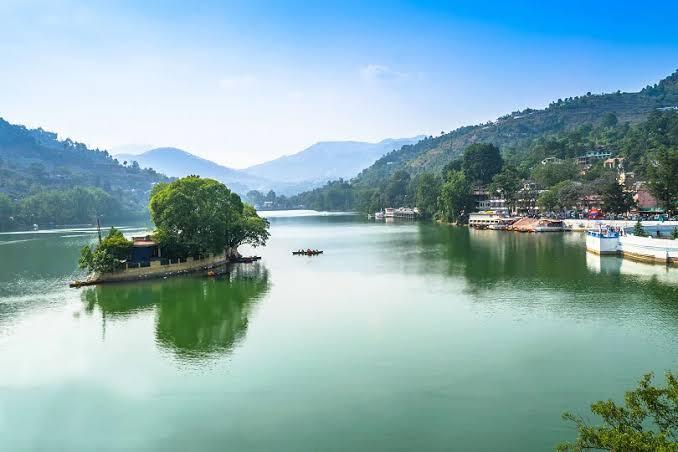
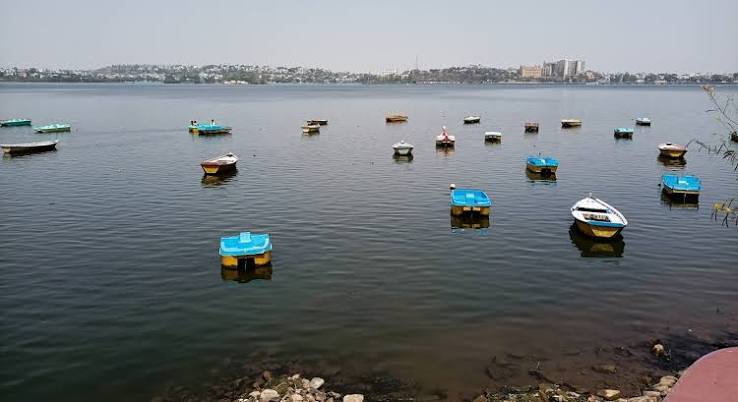
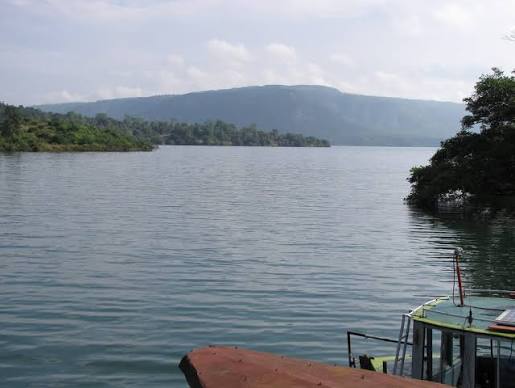
Imagine standing on the shore of a lake so enormous that you cannot see the opposite side. The water stretches to the horizon like an ocean, ships travel across it, and several countries may share its shoreline. The world’s largest lakes are not simply beautiful geographical features—they store enormous quantities of water, influence regional climates, support fisheries and wildlife, and provide livelihoods for millions of people.
For Indian students, travellers and general-knowledge readers, one detail is especially important: “largest lake” usually means largest by surface area, not by depth or water volume. By that measure, the Caspian Sea ranks first despite having “Sea” in its name because it is an enclosed inland water body. Lake Superior is the world’s largest freshwater lake by surface area when Michigan and Huron are conventionally listed separately.
Surface-area figures vary slightly among geographical sources because lake levels change and measurement methods differ. The approximate figures below follow commonly reported modern estimates.
Top 10 Largest Lakes in the World: Overview
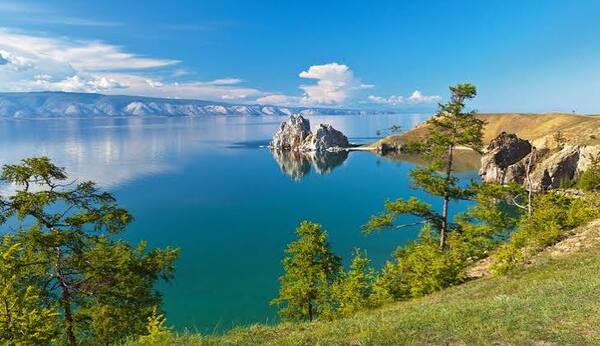
| Rank | Lake | Approx. Area | Location |
|---|---|---|---|
| 1 | Caspian Sea | 371,000+ km² | Europe/Asia |
| 2 | Lake Superior | 82,100 km² | Canada & United States |
| 3 | Lake Victoria | 68,000–69,000 km² | Tanzania, Uganda & Kenya |
| 4 | Lake Huron | 59,600 km² | Canada & United States |
| 5 | Lake Michigan | 58,000 km² | United States |
| 6 | Lake Tanganyika | 32,900 km² | East/Central Africa |
| 7 | Lake Baikal | 31,500–31,700 km² | Russia |
| 8 | Great Bear Lake | About 31,000 km² | Canada |
| 9 | Lake Malawi | About 29,600 km² | Malawi, Mozambique & Tanzania |
| 10 | Great Slave Lake | About 28,000 km² | Canada |
1. Caspian Sea – The Largest Lake in the World
- The Caspian Sea is easily the world’s largest lake by surface area. It covers roughly 371,000 square kilometres or more, depending on water level and the measurement used.
- It lies between Europe and Asia and is bordered by Russia, Kazakhstan, Turkmenistan, Iran and Azerbaijan.
- Why is it called a sea if it is actually a lake? Its extraordinary size, saline water and historical importance led to the name. Geographically, however, it is an enclosed inland body of water without a natural connection to the world’s oceans.
- The Caspian region is also economically important because of its fisheries, shipping routes and major oil and natural-gas resources.
2. Lake Superior – Largest Freshwater Lake by Surface Area
- Lake Superior is one of North America’s five Great Lakes and covers approximately 82,100 square kilometres.
- It sits between Canada and the United States.
- Its name is appropriate: by the conventional separate-lake ranking, Superior has the greatest surface area of any freshwater lake in the world.
- Lake Superior is famous for its enormous volume, cold water and dramatic shorelines. It is so large that it can create weather effects of its own.
- Despite being a lake, conditions can become extremely rough, with powerful waves and storms making navigation challenging.
3. Lake Victoria – Africa’s Largest Lake
- Lake Victoria is the largest lake in Africa by surface area and one of the world’s great tropical lakes.
- Its waters are shared primarily by Tanzania, Uganda and Kenya, covering roughly 68,000–69,000 square kilometres depending on the measurement.
- Lake Victoria plays a major role in East African life. Millions of people live within its wider basin and depend on the lake directly or indirectly for fishing, transportation, agriculture and water.
- It is also closely associated with the Nile system, making it particularly important geographically.
- Unlike some other enormous lakes on this list, Victoria is relatively shallow for its huge surface area.
4. Lake Huron – A Giant of the Great Lakes
- Lake Huron covers approximately 59,600 square kilometres and lies between Canada and the United States.
- It is another member of the Great Lakes system.
- One of Lake Huron’s most fascinating geographical features is Manitoulin Island, the world’s largest island situated in a freshwater lake.
- There is also an interesting technical issue with its ranking.
- Lake Huron and Lake Michigan are connected through the Straits of Mackinac and maintain essentially the same water level. Hydrologically, they can therefore be regarded as a single water body called Lake Michigan-Huron.
- However, traditional geographical lists usually rank them separately, which is the convention followed here.
5. Lake Michigan – Entirely Within the United States
- Lake Michigan has a surface area of roughly 58,000 square kilometres.
- Unlike the other Great Lakes, it lies entirely within the United States.
- Major cities have developed along its shoreline, with Chicago being the most famous. The lake plays an important role in transportation, tourism, recreation and regional water resources.
- Its sandy beaches can surprise first-time visitors because some locations look more like an ocean coastline than the shore of an inland freshwater lake.
- Together, Michigan and Huron form an enormous interconnected freshwater system.
6. Lake Tanganyika – Long, Ancient and Extremely Deep
- Lake Tanganyika stretches across Tanzania, the Democratic Republic of the Congo, Burundi and Zambia.
- Its surface area is approximately 32,900 square kilometres.
- Surface area, however, tells only part of its story.
- Tanganyika reaches a maximum depth of roughly 1,470 metres, making it the world’s second-deepest lake after Lake Baikal.
- It is also exceptionally long and contains an enormous volume of freshwater.
- The lake’s ancient history and isolation have allowed a remarkable variety of species to evolve, making it particularly valuable for scientific and ecological research.
7. Lake Baikal – The World’s Deepest Lake
- Lake Baikal in Siberia, Russia, covers approximately 31,500–31,700 square kilometres.
- That puts it below several other lakes by surface area, but Baikal dominates another category: depth.
- Its deepest point reaches approximately 1,642 metres, making it the deepest lake on Earth.
- Even more impressively, Baikal is generally recognised as the world’s largest freshwater lake by volume.
- Its extraordinary depth means it stores much more water than its surface-area ranking might suggest.
- Baikal is also extremely ancient and supports distinctive wildlife, including the Baikal seal.
8. Great Bear Lake – Canada’s Largest Lake Entirely Within the Country
- Great Bear Lake lies in Canada’s Northwest Territories and covers approximately 31,000 square kilometres.
- It is the largest lake located completely within Canada.
- Because it lies far north, the lake experiences extremely cold conditions and remains ice-covered for a substantial part of the year.
- Its surrounding population is small compared with lakes such as Victoria, but Great Bear Lake is environmentally significant because of its relatively remote and largely undeveloped setting.
- Its huge size also demonstrates just how lake-rich Canada is.
9. Lake Malawi – A Biodiversity Hotspot
- Lake Malawi—also known as Lake Nyasa in some countries and contexts—covers approximately 29,600 square kilometres.
- It is shared by Malawi, Mozambique and Tanzania.
- The lake is particularly famous for its extraordinary fish diversity, including numerous species of colourful cichlids.
- Fishing is extremely important for communities living around its shoreline, while its clear water and beaches have also made parts of the lake popular for tourism.
- Like Tanganyika, Malawi forms part of Africa’s remarkable system of Rift Valley lakes.
10. Great Slave Lake – North America’s Deepest Lake
- Great Slave Lake in Canada’s Northwest Territories covers approximately 28,000 square kilometres, although published estimates vary slightly.
- It is famous not only for its enormous surface area but also for its depth.
- At more than 600 metres at its deepest point, it is generally recognised as the deepest lake in North America.
- The city of Yellowknife, capital of Canada’s Northwest Territories, sits near its northern shore.
- During the long northern winter, large portions of the lake freeze, dramatically transforming the landscape.
Why Do Different Lists Show Slightly Different Lake Sizes?
You may find one source reporting Lake Victoria at 68,800 km² and another giving a figure closer to 69,500 km². Similar differences appear for the Caspian Sea and several other lakes.
This does not necessarily mean one list is wrong.
Lake surface areas can change because of rainfall, evaporation, seasonal conditions and long-term water-level changes. Different mapping datasets and measurement methods can also produce slightly different estimates.
There is another complication: definitions.
Michigan and Huron are conventionally listed as separate lakes, but because they are hydrologically connected at the same elevation, they can also be treated as Lake Michigan-Huron. Under that approach, the combined lake has a surface area of roughly 117,000 km² and becomes the world’s largest freshwater lake by surface area.
The Caspian Sea remains the world’s largest inland lake overall.
Largest by Area, Volume and Depth Are Not the Same
- This distinction is useful for competitive exams and general knowledge.
- The Caspian Sea is the world’s largest lake by surface area overall.
- Lake Superior is conventionally described as the largest freshwater lake by surface area when Michigan and Huron are counted separately.
- Lake Baikal is the world’s deepest lake and the largest freshwater lake by water volume.
- So a question asking “What is the world’s largest lake?” needs context. In most general geographical rankings, the expected answer is the Caspian Sea.
FAQs
1. Which is the largest lake in the world?
The Caspian Sea is the world’s largest lake by surface area, covering roughly 371,000 square kilometres or more depending on water levels and measurement methods.
2. Which is the largest freshwater lake in the world?
By the conventional surface-area ranking, Lake Superior is the largest freshwater lake at about 82,100 km². Lake Baikal is the largest freshwater lake by volume.
3. Why is the Caspian Sea considered a lake?
Despite its name and saline water, the Caspian is an enclosed inland water body with no natural connection to the global ocean, so it is generally classified geographically as a lake.
4. Which is the deepest lake in the world?
Lake Baikal in Russia is the world’s deepest lake, reaching approximately 1,642 metres at its deepest point. It also contains an exceptionally large volume of freshwater.