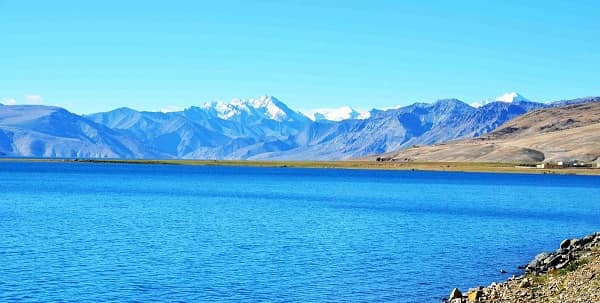
Tsomoriri Lake, also known as Tso Moriri, is one of the most beautiful and largest high-altitude lakes in India. Located in the remote Changthang Plateau of Ladakh, this pristine blue lake lies at an altitude of 4,522 meters (14,836 feet) and is a Ramsar Wetland of International Importance. Surrounded by snow-capped peaks, barren mountains, and nomadic Changpa settlements, it offers a breathtaking and raw Himalayan experience.
Quick Overview — Tsomoriri Lake Ladakh
| Detail | Information |
| Location | Korzok Village, Changthang, Leh District, Ladakh |
| Also Known As | Tso Moriri / Mountain Lake |
| Type | High-Altitude Endorheic Lake |
| Altitude | 4,522 meters (14,836 feet) |
| Surface Area | ~140 sq km |
| Timings | Open 24 hours (Best visited during daylight) |
| Entry Fee | No fee (Protected Area Permit required) |
| Best Time to Visit | June to September |
| Nearest Town | Korzok (~7 km from lake) |
Location of Tsomoriri Lake
Tsomoriri Lake is situated in the Changthang region of Ladakh, approximately 230 km southeast of Leh. It is a brackish-to-freshwater lake fed by springs and snowmelt, with no outlet. The lake is part of the Tsomoriri Wildlife Sanctuary and is home to diverse wildlife, including the endangered Tibetan wild ass (Kiang), foxes, and numerous migratory birds.
The crystal-clear turquoise waters and the stark, dramatic mountain landscape make it one of the most photogenic lakes in India. The nearby village of Korzok is the main base for visitors.
Directions to Tsomoriri Lake
Reaching Tsomoriri Lake is an adventurous journey, usually done as part of a multi-day Ladakh itinerary.
- From Leh: 230 km via Chumathang and Mahe. Drive time: 6–7 hours.
- Standard Route: Leh → Chumathang → Mahe → Tsomoriri.
- From Manali: Via Keylong and Sarchu (long and challenging route).
- By Air: Fly to Leh Airport, then take a private taxi or organized tour.
Important Note:
- A Protected Area Permit (PAP) is mandatory for foreigners.
- Indian tourists need an Inner Line Permit (ILP).
- Permits are arranged through registered tour operators in Leh.
- The road is rough and not suitable for self-drive by beginners. High-clearance vehicles are recommended.
Timings and Activities
Tsomoriri Lake is accessible 24 hours, but visitors usually arrive during daylight. The best time to visit the lake is between June and September when the roads are open.
Main Activities:
- Photography and enjoying the stunning turquoise waters
- Short walks along the lakeshore
- Visiting Korzok Monastery and interacting with Changpa nomads
- Birdwatching (especially Bar-headed Geese and Black-necked Cranes)
- Camping near the lake (with permission)
- Stargazing at night (one of the best places in Ladakh)
Boating is not allowed as it is a protected wetland.
Nearby Places
Tsomoriri Lake is often visited as part of the famous “Lakes Circuit” in Ladakh:
- Korzok Village — Highest permanent settlement in Ladakh (~4,600 m)
- Tso Kar (White Lake) — Another beautiful lake (~80 km)
- Pangong Lake — Can be combined in longer itineraries
- Mahe Bridge — Scenic stopover point
- Hanle — Remote village with one of the world’s highest observatories
FAQs — Tsomoriri Lake Ladakh
Q1. What are the best timings to visit Tsomoriri Lake?
A: Visit during daylight hours. The lake is most beautiful in the morning and late afternoon.
Q2. Is a permit required for Tsomoriri Lake?
A: Yes. All visitors need permits (ILP for Indians, PAP for foreigners), which must be arranged through registered tour operators in Leh.
Q3. How far is Tsomoriri Lake from Leh?
A: Approximately 230 km. The drive takes 6–7 hours.
Q4. When is the best time to visit Tsomoriri Lake?
A: June to September (when the road is open). The lake area is inaccessible in winter due to heavy snow.
Q5. What activities are available at Tsomoriri Lake?
A: Photography, lakeside walks, birdwatching, visiting Korzok village, and camping. Boating is not permitted.
Overall, Tsomoriri Lake is a jewel of Ladakh that showcases the raw and majestic beauty of the high-altitude desert. Its pristine waters, dramatic landscapes, and rich biodiversity make it a must-visit for those seeking an authentic Himalayan experience. Always travel with a reliable tour operator and respect the fragile high-altitude ecosystem.