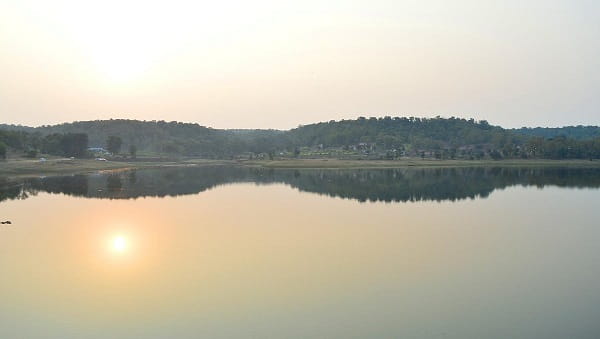
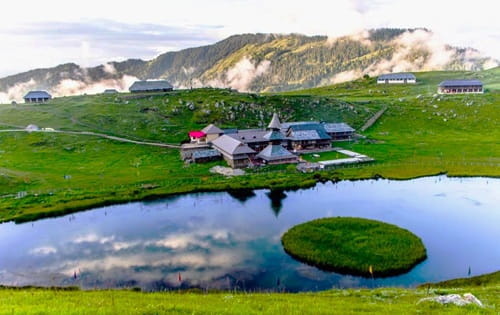
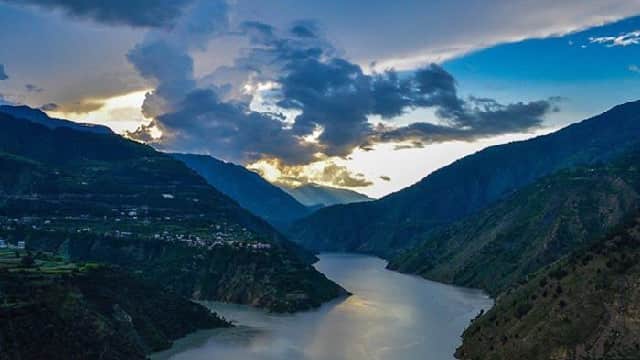
If you’ve ever seen photos of nearly 100,000 bar-headed geese blanketing a Himalayan lake in winter, there’s a good chance you were looking at Pong Dam’s reservoir. This was once the tallest earth-fill dam in India, and its backwaters have transformed into one of the country’s most significant Ramsar wetland sites, drawing birdwatchers from across the globe every winter. If you’re planning a trip through Kangra or Dharamshala, here’s everything worth knowing.
Quick Overview
| Detail | Information |
| Also Known As | Beas Dam |
| River | Beas River |
| Location | Khatiyar, Kangra district, Himachal Pradesh (upstream of Talwara) |
| Distance from Dharamshala | Around 55 km |
| Distance from Amritsar | Around 110 km |
| Distance from Chandigarh | Around 170 km |
| Nearest Airport | Gaggal Airport, Kangra, around 75 km |
| Nearest Railway Station | Pathankot, around 70 km |
| Construction Period | 1961 to 1974 |
| Status | Tallest earth-fill dam in India at completion |
| Dam Height | 133 metres |
| Dam Length | 1,951 metres |
| Reservoir Name | Maharana Pratap Sagar |
| Reservoir Area | Around 24,529 hectares |
| Bird Sanctuary Declared | 1983 |
| Ramsar Wetland Site Since | 2002 |
| People Displaced | 90,702 across 339 villages |
| Best Time to Visit | September to March, for migratory birds |
Where Pong Dam Is Located
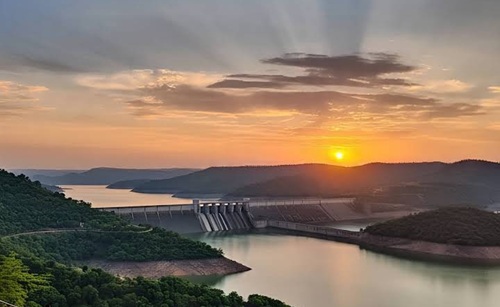
Pong Dam sits at Khatiyar in Kangra district, Himachal Pradesh, just upstream of Talwara, nestled in the wetland zone of the Shivalik hills. It’s roughly 55 kilometres from Dharamshala, 110 kilometres from Amritsar, and 170 kilometres from Chandigarh, making it a genuinely feasible add-on for travellers exploring either Himachal’s hill stations or Punjab’s plains.
Gaggal Airport in Kangra, about 75 kilometres away, serves as the nearest air link, while Pathankot, around 70 kilometres out, remains the closest major railway station. HRTC Volvo buses run from Delhi ISBT to Kangra, from where local buses or a hired taxi complete the journey to the dam itself.
The River Behind This Massive Reservoir
The dam is built across the Beas River, one of the five major rivers of the Indus basin and a waterway that carries genuine historical and cultural weight across Punjab and Himachal Pradesh. This particular stretch of the Beas, cutting through the Shivalik hills’ wetland zone, made an ideal site for one of India’s most significant post-independence water infrastructure projects.
The reservoir created here, along with the Bhakra Dam further along the Sutlej, is jointly managed by the Bhakra Beas Management Board, which authorises monthly water releases to serve the needs of Punjab, Haryana, Rajasthan, Delhi, and Chandigarh, while also supplying drinking water to Himachal Pradesh itself.
A History Stretching Back Nearly a Century
The idea for a dam at this exact site actually dates back to 1926, with the Punjab Government ordering surveys of the Indus River and its tributaries the following year. Interest in the project initially declined after early studies deemed it technically difficult given the risk of flood waters. It wasn’t until 1955 that fresh geological and hydrological studies were carried out, ultimately recommending an earth-fill embankment design.
Construction on Pong Dam began in 1961 as the second phase of the broader Beas Project, and was completed in 1974. At the time, it stood as the tallest earth-fill dam in India, a genuinely significant engineering achievement for its era. The resulting reservoir was named Maharana Pratap Sagar, honouring the legendary 16th-century Mewar ruler, and it was formally declared a bird sanctuary in 1983 before earning Ramsar Wetland status in 2002.
The Human Cost Behind This Reservoir
It’s genuinely important to address this honestly. Building Pong Dam and filling its massive reservoir displaced 90,702 people across 339 villages in Himachal Pradesh, with affected families slated for resettlement in Rajasthan. This resettlement process has faced serious, prolonged delays — as of February 2014, 9,732 requests for land allotment still remained pending, and Himachal Pradesh has threatened contempt-of-court action against Rajasthan over the unresolved issue. This remains a documented, unresolved grievance rather than a settled historical footnote, and it’s worth understanding as part of the dam’s real legacy alongside its engineering and ecological achievements.
Why Pong Dam Has Become a Genuine Birdwatcher’s Paradise
This is where Pong Dam genuinely shines. The reservoir’s wetland habitat attracts staggering numbers of migratory birds each winter, with visitor accounts describing bird counts reaching up to 125,000 in January alone. Species recorded here include bar-headed geese, greylag geese, red-necked grebes, northern lapwings, common teal, spot-billed ducks, Eurasian coots, black storks, and numerous wader and raptor species.
More than five thousand tourists reportedly visit the sanctuary during peak winter season annually, and the ecotourism industry around bird photography has grown considerably as awareness of Pong’s biodiversity has spread. September through March remains the prime window, with January often cited as the peak month for sheer numbers.
A Submerged Temple That Reappears Each Summer
Here’s a genuinely fascinating detail. The Bathu Temples, an ancient cluster located about 7 kilometres from Jawali, remain completely submerged beneath the reservoir for roughly eight months of the year. Between March and June, when water levels drop, these historic temples emerge from the water, offering visitors a rare and genuinely memorable glimpse of pre-dam heritage that’s otherwise hidden beneath Maharana Pratap Sagar’s surface.
What There Is to Do at Pong Dam
Beyond birdwatching, the reservoir supports a genuinely thriving fishery, with mahseer, rohu, catla, and common carp among the species found here. Mahseer angling at Pong Dam is described as unique in the entire country, partly due to Himachal Pradesh’s specific fishing regulations that protect minimum catchable sizes, allowing female mahseer to breed at least once before capture. Fishing here draws serious anglers alongside casual tourists trying their hand with a rod and hook.
A dedicated water sports centre has been established at the reservoir, offering canoeing, rowing, sailing, water skiing, and swimming, along with structured water safety and rescue training across basic, intermediate, and advanced course levels. Modern infrastructure here includes a 75-bed hostel and a 10-suite rest house, reportedly the only facility of its kind in the country. Boat rides through the wildlife-rich waters, particularly around Nagrota Surian, let visitors combine bird spotting with visits to spots like Ranchar Island and Bath Ki Ladi temple.
A Practical Note on Visitor Experience
It’s worth being upfront that visitor feedback on Pong Dam itself is somewhat mixed for casual picnic trips, with some specifically recommending the Nagrota Surian area instead for a more rewarding overall experience, particularly for birdwatching and boat access. Staying at forest rest houses or farm stays near Nagrota Surian, offering clean facilities and home-cooked meals, has been specifically praised by regular visitors as a genuinely peaceful way to experience the reservoir.
Timings and Best Time to Visit
September through March offers the ideal window for visiting Pong Dam, coinciding with peak migratory bird season and considerably more comfortable weather than Himachal’s warmer months. January in particular stands out for birdwatchers chasing the highest possible bird counts, while March through June offers the added bonus of potentially seeing the submerged Bathu Temples emerge as water levels drop.
Frequently Asked Questions
Q1. Why is Pong Dam significant beyond just being a large earth-fill dam?
A. Its reservoir, Maharana Pratap Sagar, is a designated Ramsar Wetland Site since 2002 and hosts staggering numbers of migratory birds each winter, sometimes exceeding 100,000 individuals, making it one of India’s most ecologically important wetland habitats.
Q2. Can I actually see the submerged Bathu Temples during my visit?
A. Only during a specific window, roughly March through June, when reservoir water levels drop enough to expose these ancient temples. Outside this period, they remain completely submerged beneath the water.
Q3. Is Pong Dam itself a good picnic spot, or should I visit a different area nearby?
A. Visitor feedback is genuinely mixed on this. Several regular visitors specifically recommend the Nagrota Surian area instead, citing a more rewarding overall experience for birdwatching, boating, and accommodation compared to the main dam site.
Q4. What happened to the communities displaced by Pong Dam’s construction?
A. Around 90,702 people were displaced across 339 villages, with resettlement planned in Rajasthan. This process has faced significant delays, with thousands of land allotment requests still pending as recently as 2014, reflecting an unresolved issue in the dam’s broader legacy.