The Krishna River is one of the major rivers of Peninsular India and a lifeline for large parts of western and southern India. Beginning in the rain-rich Western Ghats of Maharashtra, the river travels eastwards across the Deccan Plateau before reaching the Bay of Bengal. Along this long journey, its water supports agriculture, drinking-water supply, industries, reservoirs and some of India’s major hydroelectric and irrigation projects.
With a length of approximately 1,400 km, the Krishna is one of India’s longest rivers. Its main course passes through Maharashtra, Karnataka, Telangana and Andhra Pradesh, while its wider drainage basin also covers adjoining areas. Major tributaries such as the Bhima, Tungabhadra, Ghataprabha, Malaprabha and Musi considerably expand the river system.
The Krishna is especially important for agriculture because it flows through regions where rainfall can vary greatly from year to year. Large dams and irrigation networks help store and distribute its water. From the hills of Mahabaleshwar to the fertile Krishna Delta in Andhra Pradesh, the river has enormous geographical, economic and cultural importance.
Krishna River Overview
| Particular | Details |
|---|---|
| River Name | Krishna River |
| River Type | Peninsular river |
| Origin | Near Mahabaleshwar |
| Origin State | Maharashtra |
| Mountain Range | Western Ghats |
| Approximate Length | 1,400 km |
| General Flow Direction | West to east |
| Main Flowing States | Maharashtra, Karnataka, Telangana and Andhra Pradesh |
| Major Tributaries | Bhima, Tungabhadra, Ghataprabha, Malaprabha, Koyna and Musi |
| Major Dams/Projects | Nagarjuna Sagar, Srisailam, Almatti |
| Final Destination | Bay of Bengal |
| Delta | Krishna Delta |
| Drainage Region | Deccan Plateau and eastern coastal plains |
Where Does the Krishna River Originate?
The Krishna River originates near Mahabaleshwar in Maharashtra’s Satara district, in the Western Ghats.
The source region receives substantial monsoon rainfall and gives rise to several rivers and streams. The traditional source of the Krishna is associated with the area near the ancient Krishnabai Temple at Mahabaleshwar.
From the high Western Ghats, the river begins travelling generally eastward across the Deccan Plateau.
This is an interesting geographical feature because Mahabaleshwar is relatively close to India’s western coastline. However, instead of taking the shorter route towards the Arabian Sea, the Krishna flows east because of the overall slope and drainage pattern of the Peninsular plateau.
Important facts about the Krishna’s origin:
- It originates near Mahabaleshwar.
- The source lies in Satara district, Maharashtra.
- It begins in the Western Ghats.
- The river primarily flows towards the east.
- It ultimately reaches the Bay of Bengal.
- The river is primarily dependent on monsoon rainfall.
What Is the Length of the Krishna River?
The Krishna River is approximately 1,400 kilometres long.
This makes it one of the longest rivers of Peninsular India, after the Godavari.
The river travels across the Deccan Plateau and eventually enters the eastern coastal plains. During its journey, it receives water from a large network of tributaries draining parts of Maharashtra, Karnataka, Telangana and Andhra Pradesh.
Unlike major Himalayan rivers, the Krishna does not depend on permanent glaciers for its flow. Rainfall during the southwest monsoon is therefore particularly important for maintaining river levels and filling reservoirs across its basin.
Which States Does the Krishna River Flow Through?
The main course of the Krishna is associated with four Indian states:
- Maharashtra
- Karnataka
- Telangana
- Andhra Pradesh
Its river basin extends across a wider area through numerous tributaries.
1.Maharashtra
The Krishna begins near Mahabaleshwar and flows through western and southern Maharashtra.
Important places and regions associated with the river include Satara, Sangli and surrounding agricultural areas.
The Koyna River, an important tributary, joins the Krishna in Maharashtra.
2.Karnataka
After leaving Maharashtra, the Krishna enters Karnataka, where it becomes one of the state’s most important rivers.
Several tributaries contribute to the Krishna system in Karnataka, including:
- Ghataprabha
- Malaprabha
- Bhima
- Tungabhadra
Large irrigation and water-storage projects have been constructed in the Krishna basin to support agriculture in northern Karnataka.
3.Telangana
The Krishna flows along and through parts of Telangana, where it is an important source of irrigation and water.
Several major reservoirs and projects are associated with the Telangana-Andhra Pradesh section of the river.
The Musi River, which flows through Hyderabad, is a tributary of the Krishna.
4.Andhra Pradesh
The Krishna eventually flows through Andhra Pradesh towards the eastern coast.
Near Vijayawada, the river reaches the fertile coastal plains. The Prakasam Barrage plays an important role in regulating and distributing water for irrigation.
Further downstream, the river divides into channels and creates the fertile Krishna Delta before entering the Bay of Bengal.
Major Tributaries of the Krishna River
The Krishna has numerous tributaries, several of which are major rivers themselves.
1. Bhima River
- The Bhima is one of the largest tributaries of the Krishna.
- It originates in the Western Ghats of Maharashtra near Bhimashankar and flows southeastwards across Maharashtra and Karnataka before joining the Krishna.
- Its basin supports major cities, agricultural areas and reservoirs.
2. Tungabhadra River
- The Tungabhadra is another major tributary.
- It is formed by the meeting of the Tunga and Bhadra rivers, both of which originate in the Western Ghats of Karnataka.
- The Tungabhadra flows through Karnataka and along parts of the Karnataka-Andhra Pradesh region before joining the Krishna.
3. Koyna River
- The Koyna River originates in the Western Ghats of Maharashtra.
- It is particularly famous because of the Koyna Dam and hydroelectric project, one of India’s important hydropower installations.
4. Ghataprabha River
- The Ghataprabha is an important tributary in Karnataka.
- Its waters are extensively used for irrigation, and the river is associated with the famous Gokak Falls.
5. Malaprabha River
- The Malaprabha River originates in the Western Ghats region of Karnataka and eventually joins the Krishna.
- The Malaprabha reservoir supports irrigation and water supply.
6. Musi River
- The Musi River is a tributary of the Krishna in Telangana.
- It is particularly well known because it flows through Hyderabad before eventually joining the Krishna system.
Course of the Krishna River from Origin to Sea
The Krishna’s journey can broadly be divided into three sections.
1.Upper Course
- The river begins in the Western Ghats at Mahabaleshwar and flows through Maharashtra.
- In this region, tributaries such as the Koyna contribute to the river.
2.Middle Course
- The Krishna then crosses the Deccan Plateau through Karnataka and the Telangana region.
- Major tributaries including the Bhima and Tungabhadra significantly increase its flow.
- Several large dams and reservoirs have been developed along this section.
3.Lower Course
- As the Krishna approaches Andhra Pradesh’s coastal plains, its gradient becomes gentler.
- The river passes the Vijayawada region and then separates into distributaries.
- These channels create the Krishna Delta before the river finally empties into the Bay of Bengal.
Major Dams and Projects on the Krishna River
The Krishna and its tributaries support some of southern India’s most important water projects.
1.Nagarjuna Sagar Dam
- The Nagarjuna Sagar Dam is one of the best-known projects on the Krishna River.
- It is used extensively for irrigation and hydroelectric power generation.
2.Srisailam Dam
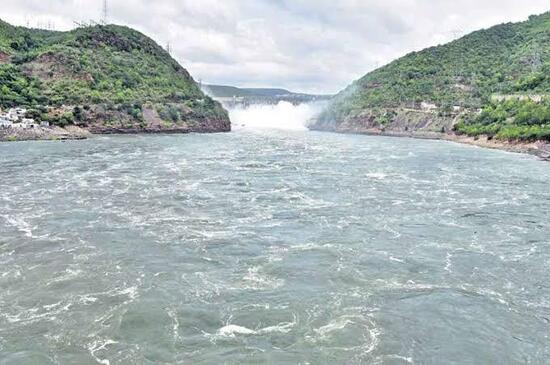
The Srisailam Dam is another major multipurpose project on the Krishna.
The reservoir is important for:
- Hydroelectric power
- Irrigation
- Water storage
- Regional water management
3.Almatti Dam
- The Almatti Dam is an important project on the Krishna in Karnataka.
- It forms part of the Upper Krishna Project and plays a significant role in irrigation and water storage.
Prakasam Barrage
Located near Vijayawada, the Prakasam Barrage helps regulate Krishna water and supply irrigation canals across the fertile delta region.
Krishna Delta and Agriculture
The Krishna Delta is one of the most productive agricultural regions along India’s eastern coast.
Over thousands of years, the river has deposited fine alluvial sediments across the lower plains, creating fertile agricultural land.
Important crops cultivated in the Krishna basin and delta include:
- Paddy
- Sugarcane
- Cotton
- Maize
- Pulses
- Groundnut
- Chillies
- Vegetables
Canal irrigation allows farmers to distribute river water across large agricultural areas.
Religious and Cultural Importance of the Krishna
The Krishna is also a culturally significant river.
Several temples, pilgrimage centres and historic settlements developed along its banks and tributaries.
Srisailam, situated near the Krishna, is one of the most important pilgrimage destinations in southern India and is famous for the Mallikarjuna Jyotirlinga temple.
Other religious and cultural centres are also connected with the Krishna basin, demonstrating how the river has influenced settlement and spiritual traditions for centuries.
Why Is the Krishna River Important?
The Krishna is a vital natural resource for southern India.
Its major contributions include:
- Irrigation: Supplies water to extensive agricultural regions.
- Hydropower: Major dams generate electricity.
- Drinking water: Reservoirs support urban and rural populations.
- Agriculture: Supports crops across the Deccan Plateau and coastal plains.
- Fertile delta: Creates highly productive agricultural land.
- Industries: Provides water for industrial and economic activities.
- Culture: Several religious centres are associated with the river.
- Biodiversity: Supports wetlands, freshwater habitats and river ecosystems.
Effective management of Krishna water is particularly important because several states depend on the same river system and rainfall varies significantly across its basin.
FAQs About the Krishna River
Q1. Where does the Krishna River start and end?
A. The Krishna River originates near Mahabaleshwar in Satara district, Maharashtra, in the Western Ghats. It travels eastwards across Peninsular India and ultimately empties into the Bay of Bengal in Andhra Pradesh.
Q2. Which states does the Krishna River flow through?
A. The main Krishna River is associated with Maharashtra, Karnataka, Telangana and Andhra Pradesh. Its extensive tributary network drains a much larger part of the Deccan Plateau.
Q3. Which are the major tributaries of the Krishna River?
A. Major tributaries include the Bhima, Tungabhadra, Koyna, Ghataprabha, Malaprabha and Musi rivers. The Bhima and Tungabhadra are among the most significant tributaries in terms of their drainage areas.
Q4. Which is longer, the Krishna or Godavari River?
A. The Godavari is longer than the Krishna. The Godavari is approximately 1,465 km long, while the Krishna is about 1,400 km long. Both are major east-flowing Peninsular rivers that drain into the Bay of Bengal.