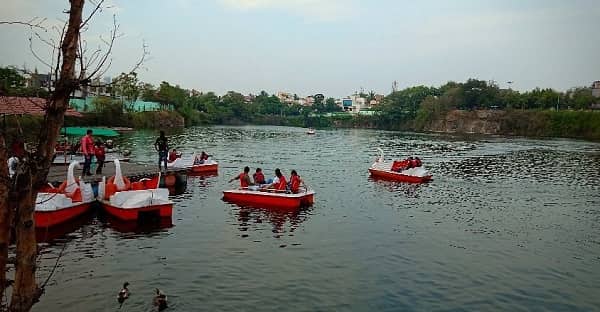
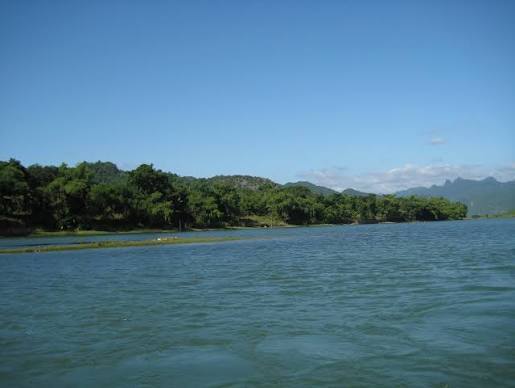
The Ganga River, also known as the Ganges, is much more than a major river on India’s map. It provides water for homes and farms, supports major cities, sustains wildlife and holds exceptional religious and cultural importance for millions of people. From the snow-covered Himalayas of Uttarakhand to the vast plains of northern and eastern India, the Ganga shapes both the landscape and everyday life along its course.
The river’s headwaters begin in the Himalayas, while the name Ganga is formally used after the Bhagirathi and Alaknanda rivers meet at Devprayag in Uttarakhand. From there, the Ganga travels through Uttar Pradesh, Bihar, Jharkhand and West Bengal before continuing into Bangladesh. Its length in India is commonly given as about 2,525 km.
Along the way, major tributaries such as the Yamuna, Ghaghara, Gandak, Kosi and Son add enormous quantities of water to the river. Together, the Ganga and its tributaries form one of India’s most important river systems, supporting a densely populated and highly productive agricultural region.
Ganga River Overview
| Particular | Details |
|---|---|
| River Name | Ganga River / Ganges |
| River Type | Perennial Himalayan river |
| Primary Headstream | Bhagirathi |
| Headwater Source | Gangotri Glacier region, Uttarakhand |
| River Named Ganga From | Devprayag |
| Approximate Length | 2,525 km |
| Indian States Along Main Course | Uttarakhand, Uttar Pradesh, Bihar, Jharkhand and West Bengal |
| Major Tributaries | Yamuna, Ramganga, Ghaghara, Gandak, Kosi, Son and Gomti |
| Major Cities Along/near River | Haridwar, Kanpur, Prayagraj, Varanasi, Patna and Kolkata metropolitan region |
| Bangladesh Name | Padma after entering Bangladesh |
| Final Destination | Bay of Bengal |
| Major Delta | Ganga-Brahmaputra-Meghna Delta |
Where Does the Ganga River Originate?
The origin of the Ganga is best understood through its Himalayan headstreams.
The Bhagirathi River, traditionally regarded as the source stream of the Ganga, originates from the Gangotri Glacier region in Uttarakhand. Its source is associated with Gaumukh, located in the high Himalayas.
Another major headstream, the Alaknanda, drains a large Himalayan catchment and meets several rivers before reaching Devprayag.
At Devprayag, the Bhagirathi and Alaknanda meet. From this confluence onward, the river is officially known as the Ganga.
This gives two useful geographical points to remember:
- Gangotri Glacier/Gaumukh: Source region of the Bhagirathi, the principal headstream.
- Devprayag: Place where the Bhagirathi and Alaknanda meet and the river takes the name Ganga.
The river then descends through the Himalayan foothills before reaching the plains at Haridwar.
What Is the Length of the Ganga River?
The Ganga has a commonly accepted length of approximately 2,525 kilometres.
Its journey takes it from the Himalayan mountains through the extensive Gangetic plains and eventually towards the Bay of Bengal.
The river’s course changes considerably along the way. In Uttarakhand, it flows through mountainous terrain and valleys. Across Uttar Pradesh, Bihar and West Bengal, it becomes a broad lowland river with extensive floodplains.
The Ganga is not India’s longest river if the total length of rivers extending outside India is considered, but it is among the country’s most important rivers in terms of population, agriculture, culture and economic activity.
Which States Does the Ganga River Flow Through?
The main Ganga River flows through five Indian states:
- Uttarakhand
- Uttar Pradesh
- Bihar
- Jharkhand
- West Bengal
Its wider basin extends across a much larger part of northern and central India through tributaries.
1. Uttarakhand
- The Ganga begins its named course at Devprayag in Uttarakhand. It flows through the mountainous region before reaching Rishikesh and Haridwar.
- Haridwar is particularly important because the river emerges from the Himalayan foothills and enters the northern plains.
2. Uttar Pradesh
- After Uttarakhand, the Ganga flows across Uttar Pradesh, where it passes through or near several major urban and religious centres.
- Important cities associated with its course include: Kanpur ,Prayagraj and Varanasi
- At Prayagraj, the Ganga meets the Yamuna River at the famous Triveni Sangam, traditionally also associated with the mythical Saraswati.
- Varanasi is one of the world’s oldest continuously inhabited cities and has an exceptionally close cultural and religious relationship with the Ganga.
3. Bihar
- The Ganga then flows eastward through Bihar.
- Major tributaries such as the Ghaghara, Gandak, Kosi and Son contribute to the river system in and around this part of the Gangetic plain.
- Patna, Bihar’s capital, is situated along the Ganga and is one of the largest cities on its banks.
4. Jharkhand
- A section of the Ganga flows along the northern edge of Jharkhand, particularly through the Sahibganj region.
- The river is important for transport, fisheries and local economic activity in this part of the state.
5. West Bengal
- After reaching West Bengal, the Ganga system divides into important channels.
- One branch enters Bangladesh and is known as the Padma, while the Bhagirathi-Hooghly system flows south through West Bengal towards the Bay of Bengal.
- The Hooghly passes through the Kolkata metropolitan region and has historically been important for trade, ports and navigation.
Major Tributaries of the Ganga River
The Ganga receives water from numerous Himalayan and Peninsular tributaries.
1. Yamuna River
- The Yamuna is one of the most important tributaries of the Ganga.
- It originates from the Yamunotri Glacier region in Uttarakhand and flows through northern India before joining the Ganga at Prayagraj.
2. Ghaghara River
- The Ghaghara is a major Himalayan tributary. Its upper system originates in the Tibetan-Himalayan region and flows through Nepal before entering India.
- It contributes a substantial volume of water to the Ganga.
3. Gandak River
- The Gandak originates in the Himalayan region of Nepal and flows south towards Bihar.
- It joins the Ganga near the Patna region.
4. Kosi River
- The Kosi is another major Himalayan tributary that enters Bihar from Nepal.
- Because of its history of floods and channel changes, it is popularly called the “Sorrow of Bihar.”
5. Son River
- The Son, or Sone, originates near Amarkantak in Madhya Pradesh.
- It travels through central and eastern India before joining the Ganga in Bihar. It is an important right-bank tributary.
6. Gomti River
- The Gomti originates in Uttar Pradesh and flows through Lucknow before eventually joining the Ganga.
7. Ramganga River
- The Ramganga originates in Uttarakhand and flows through parts of Uttar Pradesh before joining the Ganga.
Left-Bank and Right-Bank Tributaries of the Ganga
Tributaries can also be classified according to the side from which they enter the main river when facing downstream.
Major left-bank tributaries include:
- Ramganga
- Gomti
- Ghaghara
- Gandak
- Kosi
Important right-bank tributaries include:
- Yamuna
- Son
This distinction is particularly useful for geography students and competitive-exam preparation.
Importance of the Ganga for Agriculture
The Ganga and its tributaries have created one of the world’s largest and most fertile alluvial plains.
Water from the river system supports irrigation for crops such as:
- Rice
- Wheat
- Sugarcane
- Pulses
- Oilseeds
- Vegetables
- Jute in eastern regions
Sediments deposited by the river and its tributaries have contributed to fertile soils across much of northern India.
As a result, the Ganga basin is central to India’s food production and rural economy.
Religious and Cultural Importance of the Ganga
In Hinduism, the Ganga is regarded as a sacred river and worshipped as Goddess Ganga.
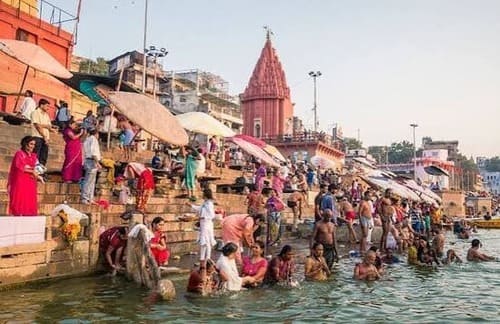
Places such as Haridwar, Prayagraj and Varanasi attract millions of pilgrims. Religious ceremonies, bathing rituals, festivals and cremation traditions have been associated with the river for centuries.
The Kumbh Mela, held periodically at major pilgrimage locations including Prayagraj and Haridwar, demonstrates the enormous spiritual importance of the river.
The Ganga is therefore simultaneously a physical river, a source of livelihood and one of India’s most recognisable cultural symbols.
Ganga River and the Sundarbans Delta
In its lower reaches, the Ganga becomes part of a huge network of distributaries shared with the Brahmaputra and Meghna river systems.
Together, they create the Ganga-Brahmaputra-Meghna Delta, one of the world’s largest delta systems.
The Sundarbans, located across India and Bangladesh, form an important part of this delta.
The region is known for:
- Mangrove forests
- Tidal waterways
- Rich aquatic ecosystems
- Royal Bengal tiger habitat
- Fishing communities
- Numerous islands and mudflats
The delta eventually opens into the Bay of Bengal.
Why Is the Ganga River Important to India?
The Ganga is essential to India’s environment, economy and society.
Its major roles include:
- Drinking water: Supports the water needs of a huge population.
- Agriculture: Provides irrigation to extensive farmland.
- Religious importance: Considered sacred by millions of people.
- Biodiversity: Supports river dolphins, fish, turtles, wetlands and other wildlife.
- Transport: Sections are used for inland water transportation.
- Industry: Many industrial and commercial centres have developed within its basin.
- Tourism: Religious cities and riverfront destinations attract domestic and international visitors.
- Historical importance: Numerous ancient cities and kingdoms developed around the Gangetic plains.
Protecting the Ganga from sewage, industrial pollution, plastic waste and ecological degradation is therefore important not only for the river itself but also for the communities and ecosystems that depend on it.
FAQs About the Ganga River
Q1. Where does the Ganga River actually start?
A. The Bhagirathi, traditionally considered the main headstream of the Ganga, begins in the Gangotri Glacier region near Gaumukh in Uttarakhand. At Devprayag, the Bhagirathi meets the Alaknanda, and from this confluence onward the river is called the Ganga.
Q2. Which five states does the main Ganga River flow through?
A. The main Ganga flows through Uttarakhand, Uttar Pradesh, Bihar, Jharkhand and West Bengal before its main eastern channel enters Bangladesh. Its wider drainage basin extends into several additional Indian states.
Q3. What are the most important tributaries of the Ganga?
A. Major tributaries include the Yamuna, Ramganga, Gomti, Ghaghara, Gandak, Kosi and Son. Together, these rivers create the vast Ganga drainage system across northern and central India.
Q4. Where does the Ganga River finally end?
A. The Ganga’s waters ultimately reach the Bay of Bengal. In its lower course, the river forms part of the vast Ganga-Brahmaputra-Meghna delta system, spread across India and Bangladesh.