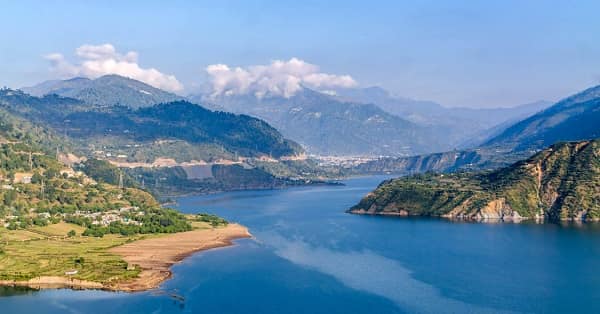
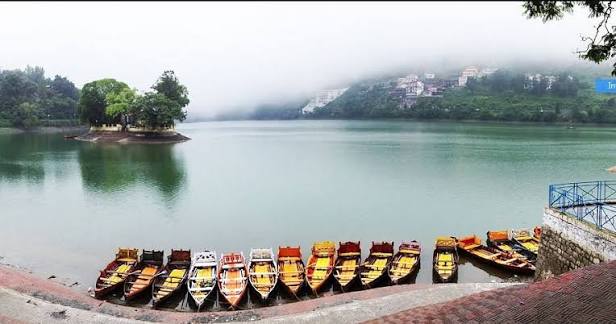
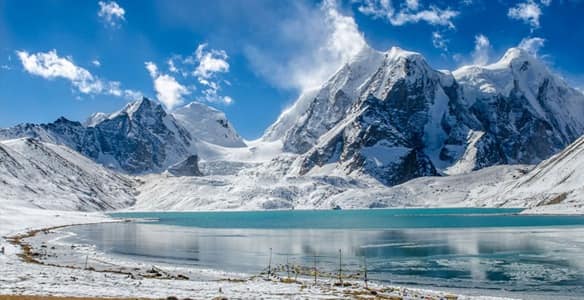
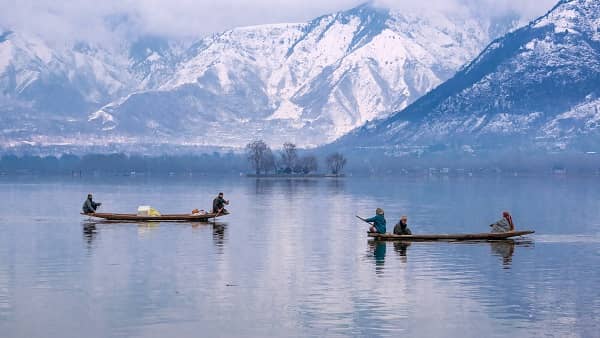
There is a moment that every first-time visitor to Srinagar describes in exactly the same way — the moment they first see Dal Lake. The morning mist rising from still blue water, snow-capped mountains reflecting perfectly on the surface, a colourfully canopied Shikara gliding silently past a row of elaborately carved wooden houseboats — all of it framed by the lush gardens of centuries-old Mughal emperors. Dal Lake is not simply a water body. It is the living, breathing heart of Kashmir — the single destination that has defined the valley’s identity as India’s earthly paradise for over four centuries of poetry, painting, film, and travel literature. Covering approximately 18 square kilometres in the heart of Srinagar, the summer capital of Jammu and Kashmir, the lake is divided into four interconnected basins — Gagribal, Lokut Dal, Bod Dal, and Nagin — separated by tree-lined causeways and connected by a labyrinth of waterways that sustain an extraordinary floating village community. Known as the “Jewel of Srinagar” and among the most photographed natural destinations in Asia, Dal Lake in 2026 continues to deserve every superlative ever written about it. Here is everything you need to know before visiting.
Quick Overview — Dal Lake Srinagar
| Detail | Information |
| Location | Srinagar, Jammu and Kashmir — 190001 |
| Type | Urban Freshwater Lake — Natural Wetland |
| Lake Area | ~18 Square Kilometres |
| Lake Depth | Average 5 feet / Maximum 20 feet |
| Shoreline Length | ~15.5 km |
| Four Basins | Gagribal, Lokut Dal, Bod Dal, Nagin |
| Timings | Open 24 Hours — Shikaras from 6:00 AM to 10:00 PM |
| Entry Fee | No formal entry fee |
| Shikara Ride | ₹500 to ₹2,000+ per hour depending on type |
| Nearest Airport | Srinagar International Airport — ~15-22 km |
| Nearest Bus Station | Srinagar Bus Stand — ~3 km |
| Best Time to Visit | April to October |
Location of Dal Lake
Dal Lake is situated at the very centre of Srinagar city — flanked by the Zabarwan Mountain Range on the northeast, Mughal gardens on the northern shore, and the old city on the western bank.
Dal Lake is located in Srinagar, the summer capital of Jammu and Kashmir — PIN 190001, positioned at an altitude of approximately 1,585 metres above sea level within the Kashmir Valley. The lake occupies the geographical heart of the city — its northern shore is lined with the magnificent Mughal gardens of Shalimar Bagh and Nishat Bagh, while the Zabarwan Mountain Range rises dramatically to its northeast, creating the snow-capped backdrop that makes every Dal Lake photograph iconic. The western shoreline runs along the Boulevard Road — Srinagar’s famous lakeside promenade — while the historic old city and the Hazratbal Shrine occupy the lake’s northwestern bank.
The lake is not simply water — it is an entire ecosystem and community. Approximately 1,500 houseboats float on Dal Lake, ranging from budget wooden boats to elaborately carved five-bedroom luxury vessels with drawing rooms, full kitchens, and rooftop gardens. An estimated 50,000 people live on and around the lake in floating homes and island communities — tending vegetable gardens, running floating markets, and maintaining the 6,000-year-old tradition of lake life that Dal sustains. The lake also contains two iconic islands — Rup Lank (Char Chinar) in Lokut Dal and Sona Lank in Bod Dal — both planted with the famous chinar trees that turn Dal Lake’s autumn skyline into a tableau of gold and crimson.
Directions to Dal Lake
Dal Lake is located within Srinagar city and reachable from the airport, bus station, and all major city landmarks by road in 15-30 minutes.
From Srinagar International Airport — approximately 15-22 km from the Boulevard Road lakefront, accessible by taxi or pre-booked cab in approximately 30-40 minutes via the airport road and Residency Road. The airport is connected by regular flights from Delhi, Mumbai, Bengaluru, Kolkata, Jammu, and several other cities. From Srinagar Bus Stand — approximately 3 km from Dal Gate, the main entry point to the Boulevard Road lakefront. Auto-rickshaws and taxis from the bus stand reach the lake in 10-15 minutes. From Jammu Tawi Railway Station — approximately 270 km away, the journey continues by road via NH-44 in approximately 6-8 hours by bus or cab. Dal Gate at the southern end of the Boulevard Road is the most common starting point for the lakefront promenade and the primary Shikara departure point. Nehru Park Jetty, Nagin Jetty, and the Hazratbal Ghat are additional access points for different parts of the lake.
Within Srinagar, auto-rickshaws, taxis, and app-based cab services (available through Ola and local operators) provide easy access to the Boulevard Road from any part of the city.
Timings and Activities
Dal Lake’s natural beauty is accessible at any hour, with formal Shikara and boating services operating from early morning through late evening throughout the year.
Dal Lake is accessible 24 hours a day — there are no entry gates or formal closing times for the lakefront promenade along Boulevard Road. Shikara rides — the quintessential Dal Lake experience — are available from approximately 6:00 AM to 10:00 PM, with charges ranging from ₹500 for a basic one-hour ride to ₹2,000-plus for decorated wedding Shikaras or full-day sightseeing tours. Houseboat stays are available year-round and range from ₹2,000 per night for budget wooden boats to ₹15,000-plus per night for premium heritage houseboats with all meals included. No formal entry fee is charged to walk the Boulevard Road promenade or visit the lakefront.
The most magical experience is the early morning floating vegetable market — operating from approximately 6:00 AM to 8:00 AM daily, where farmers on Shikaras trade produce on the water in a tradition that has continued unchanged for centuries. Sunrise and sunset from the Boulevard Road are among the most photographed moments in Indian travel — the combination of the Zabarwan peaks, the houseboat silhouettes, and the light on the water is genuinely unlike anywhere else in the country.
Nearby Places
Dal Lake’s central Srinagar location places it within minutes of the city’s most celebrated Mughal, religious, and cultural heritage destinations.
Shalimar Bagh — The grandest of Srinagar’s Mughal gardens, built by Emperor Jahangir in 1619 for Empress Nur Jahan — a terraced garden of fountains, canals, and chinar trees on Dal’s northern shore. Nishat Bagh — The “Garden of Gladness” — a twelve-terraced Mughal garden with the finest views of Dal Lake and the Zabarwan Range, built in 1633 by Asaf Khan, brother of Empress Nur Jahan. Hazratbal Shrine — One of Kashmir’s most sacred Islamic sites, housing a relic believed to be a hair of Prophet Muhammad, situated directly on the northwestern shore of Dal Lake. Shankaracharya Temple — Perched atop Shankaracharya Hill at 1,100 metres, offering the most comprehensive aerial view of Dal Lake and Srinagar city. Chashme Shahi — The “Royal Spring” — a compact Mughal garden housing Srinagar’s most famous natural spring, built in 1632 by Shah Jahan. Dachigam National Park — Home to the critically endangered Hangul (Kashmir Red Deer) and Himalayan leopard, approximately 22 km from the lake.
FAQs — Dal Lake Srinagar
Q1. What is the best time to visit Dal Lake Srinagar?
A: April to October is ideal — spring (April-May) brings blooming flowers and the best houseboat weather, while autumn (September-October) transforms the chinar trees into brilliant gold and red.
Q2. How much does a Shikara ride cost on Dal Lake?
A: Basic Shikara rides start at approximately ₹500 per hour. Decorated Shikaras for sightseeing or photography cost ₹1,000-₹2,000 per hour. Full-day tours are negotiable directly with boatmen.
Q3. Can you stay on a houseboat on Dal Lake?
A: Yes — approximately 1,500 houseboats offer overnight stays ranging from ₹2,000 per night for budget options to ₹15,000-plus for premium heritage houseboats with full meals and butler service.
Q4. Is there an entry fee for Dal Lake Srinagar?
A: No formal entry fee is charged for the Boulevard Road promenade or lakefront access. Individual Shikara rides, houseboat stays, and garden entries carry their own charges.
Q5. What is the floating vegetable market on Dal Lake?
A: The floating market operates daily from approximately 6:00 AM to 8:00 AM — farmers on Shikaras trade fresh produce directly on the water in a centuries-old tradition that is one of Dal Lake’s most unique and photographed experiences.